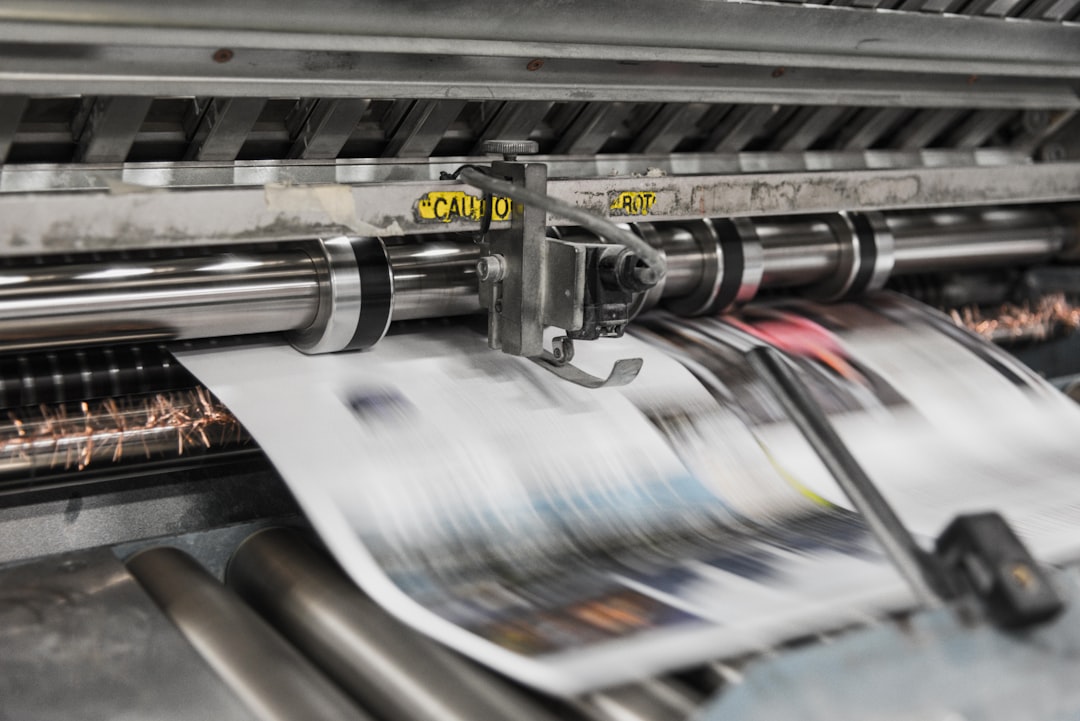
Artists have always tried to make the unseen seen. Today, technology gives us new tools to visualize invisible forces — from magnetic fields and airflows to emotions, algorithmic patterns, and cultural networks. This definitive guide bridges creative technique and practical production: how to collect invisible data, transform it into compelling visuals, and output museum-quality prints that challenge perception and start conversations.
Along the way you'll find hands-on tutorials, workflow recipes, ethical guardrails, business strategies, and real-world case studies showing how creators turn intangible signals into tangible, saleable art. For context about the ethics of algorithmic art and generative workflows, see our primer on AI ethics in image generation.
1. Why technology matters: making the invisible tangible
From metaphors to measurable signals
Historically, artists used metaphor and suggestion to imply things you couldn’t directly see. Technology adds an empirical layer: sensors, APIs, and computational models let you map phenomena to visual attributes. A gust of wind becomes vector lines; heart-rate variability becomes color saturation. These mappings transform conceptual art into reproducible work that still retains poetic weight.
Crossing art and science for richer narratives
The intersection of art and science is not a trend — it's a productive method. Scientists provide measurement and models; artists translate results into narratives. Projects that merge both disciplines are often the most provocative because they ground wonder in data. If you’re exploring perceptual AI, take a look at how perceptual models are used in athlete monitoring for inspiration on signal processing and visualization techniques in perceptual AI & RAG for player monitoring.
Why prints still matter
Digital screens are ubiquitous, but prints force a different kind of attention. Prints allow scale, texture, and materiality — variables that help an audience feel a concept. For independent creators who plan physical distribution, understanding fulfillment and pricing is critical; our market study on how Copenhagen makers price limited-edition prints provides practical benchmarks: How Copenhagen Makers Price Limited-Edition Prints in 2026.
2. Core technologies artists use today
Sensors and data capture
Sensors translate invisible forces to numbers. Popular options include environmental sensors (temperature, humidity, particulate matter), MEMS sensors for motion (accelerometers, gyroscopes), magnetometers, microphones, and biosensors (heart rate, galvanic skin response). Use off-the-shelf microcontrollers, single-board computers, or phone sensors depending on budget and resolution needs.
Edge compute and local models
Processing data at the edge reduces latency, preserves privacy, and enables installations in low-connectivity environments. If you want to run local models (for instance, denoising or small generative models) look at optimization strategies for affordable devices — our guide on optimizing the Raspberry Pi 5 for local LLMs explains kernel tuning, cooling, and power tricks that apply to visual compute as well: Optimizing the Raspberry Pi 5 for Local LLMs.
Generative and visualization software
From shader languages and Processing to modern generative AI, software is where meaning is created. Artists use Python, OpenFrameworks, TouchDesigner, Max/MSP, shader code, and large models for texture synthesis. When combining AR experiences with prints (for hybrid physical/digital artifacts), look to projects that blend AR, NFTs, and postal fulfillment for cross-channel distribution: Designing Ethical Digital Memorials for Lost Species — AR, NFTs, and Postal Fulfillment.
3. Visualizing invisible forces: techniques and mappings
Designing a mapping strategy
Every visualization starts with a mapping: which data dimension becomes color, which becomes motion, which maps to scale? Choose mappings that preserve perceptual clarity. Use color spaces like CIELAB for print-friendly color transitions and avoid mappings that introduce ambiguity (e.g., mapping two unrelated measures to hue and brightness without normalization).
Examples of powerful mappings
- Sound to texture: convert spectral bands into micro-patterns. - Magnetic fields to vector flow: use streamlines to show directionality. - Emotional signals to color: map heart-rate variability to chroma and GSR peaks to highlights. Each mapping should be documented so viewers and clients understand the transformation from signal to artifact.
Layering and narrative
Layering multiple data streams creates narratives. Be deliberate: treat each layer like a paragraph in an essay. For complex, multi-layered works you may use perceptual AI to summarize or reduce dimensionality before visual encoding — see applied perceptual AI techniques in monitoring systems for a model of reducing noisy inputs: Beyond the Box Score: Perceptual AI & RAG.
Pro Tip: Always create two outputs from your mapping — a high-fidelity archival file for print and a reduced, annotated version for display or AR. The archival file preserves detail that printers need; the annotated version helps audiences decode the invisible sources.
4. End-to-end workflow: from capture to gallery wall
Step 1 — Capture and logging
Start with a consistent, time-stamped data log. Use robust storage formats (CSV, JSONL, or binary formats like Parquet for large streams). If you're operating in the field with edge devices, plan for intermittent connectivity and local buffering. For strategies on deploying resilient edge systems and micro-logistics for distribution, see neighborhood and hub playbooks: Neighbourhood Exchange Hubs.
Step 2 — Processing and model application
Clean the data, normalize ranges, and apply dimensionality reduction (PCA, t-SNE, UMAP) if necessary. Apply deterministic transforms first; add generative elements as augmentations. When using AI, document dataset provenance and model versions to ensure reproducibility and ethical accountability — see our guidance on AI ethics.
Step 3 — Rendering, proofing, and color management
Render high-resolution TIFFs or PDFs in the printer's color profile (CMYK/ICC). Soft-proof in a calibrated environment. If you design for ambient-augmented prints (lighting or AR triggers), integrate file variants for each medium and proof both physical and digital experiences together. Lighting choices dramatically affect perception — survey winning lighting strategies for pop-ups here: Lighting Brands That Win Pop‑Ups & Night Markets.
5. Case studies: real projects that visualize the invisible
Memorializing species with AR and prints
A cross-disciplinary project used environmental sensor logs, biodiversity records, and generative textures to make a memorial series for extinct and endangered species. The project combined AR overlays with limited-run prints that included minted tokens and postal fulfillment. Read the full playbook on ethical digital memorial design: Designing Ethical Digital Memorials for Lost Species.
Limited-edition print runs in Copenhagen
A Copenhagen print studio tested demand-based pricing and scarcity signals. Their model balanced production cost, edition size, and artist time; the result is a replicable pricing template for creators who want to charge premium prices for narrative-driven prints. Practical pricing benchmarks are available in How Copenhagen Makers Price Limited-Edition Prints.
Micro‑drops and hybrid merch for collectors
Creators using tokenized releases and physical fulfillment saw higher engagement when combining collector boxes with staged pop-up events. If you’re exploring hybrid merch and scarcity marketing, our strategies for NFT micro-drops and collector boxes show execution options and pitfalls: Micro‑Drops, Collector Boxes & Hybrid Pop‑Ups.
6. Ethical, legal, and security considerations
AI and image-generation compliance
Generative systems introduce copyright and provenance complexities. Keep training data logs, model names, seed values, and consent records. Our legal and compliance guide to AI image generation covers best practices: AI Ethics in Image Generation.
Firmware, supply chain and trust
Edge devices and sensors can carry vulnerabilities. If you deploy installations or distributed capture kits, follow firmware security hygiene and supply-chain controls to reduce risk. See practical defenses for edge devices here: Evolution of Firmware Supply‑Chain Security.
Stewardship and archival access
Artworks that rely on ephemeral or external data must include stewardship plans — how long will the data be preserved, who maintains the mapping code, and how will future audiences interpret the visuals? Check strategies for intergenerational access and archive modernization: Stewardship Playbook 2026.
7. Selling, presenting, and monetizing prints
Physical pop-ups and micro-events
Small events are fertile ground for selling concept-driven prints. Pop-ups let viewers experience scale and materiality, and they create urgency. Our micro-event playbook for newsrooms carries tactics you can adapt for art pop-ups and community activations: Micro‑Events and Local Trust.
On-stand logistics and mobile point-of-sale
If you sell at markets, choose compact POS and fulfillment workflows designed for short urban stays. Read the field review for mobile POS bundles to fine-tune your setup: Hands‑On: Mobile POS Bundles for Night Markets & Pop‑Ups.
Microfactories and fulfillment strategies
To maintain quality and speed, many creators now use microfactories and hybrid fulfillment. These partners reduce lead times and provide premium finishing options. Scaling boutique seasonal shops and microfactories shows how to pair design and production: Scaling Boutique Seasonal Gift Shops in 2026.
8. Practical tutorial: visualize urban heat and produce a print series
Project overview and goals
Goal: map urban heat signatures over a month, create layered visualizations, and produce a signed limited-edition run of 50 prints. Tangible outcomes: 1) archival TIFFs for the printer, 2) annotated PDF for the exhibit, and 3) AR overlay for a QR-triggered mobile experience.
Materials and tech stack
Hardware: temperature and humidity sensors, Raspberry Pi 5 for edge logging, GPS module, portable power packs. Software: Python for ingestion and cleaning, Pandas for preprocessing, UMAP for reduction, Processing or TouchDesigner for visuals, and high-resolution TIFF export. For tips on tuning Raspberry Pi setups for reliable local compute, consult Optimizing the Raspberry Pi 5 for Local LLMs.
Step-by-step workflow
1) Deploy sensors with synchronized clocks and GPS. 2) Aggregate logs daily; run sanity checks to remove sensor drift. 3) Normalize temperature ranges across sites and apply UMAP to reduce spatio-temporal dimensions. 4) Design visual mappings (e.g., temperature -> color, humidity -> texture, time -> line thickness). 5) Render at 600–1200 DPI for large prints and proof in the printer’s ICC profile. 6) Produce a run with finishing options (laminate, textured paper) and prepare AR annotations for the gallery using anchored image targets.
Pro Tip: Build a miniature proofing rig: a small, dimmable lamp and a neutral grey card. Test how printed color and texture change under gallery lighting before finalizing the edition.
9. Comparison: choosing the right visualization tech for prints
The table below helps you weigh sensor and rendering choices based on cost, fidelity, compute demand, and print suitability.
| Technique / Tech | Typical Cost | Fidelity | Compute Needs | Best For |
|---|---|---|---|---|
| Environmental sensors (temp, humidity, PM) | Low ($50–$300) | Medium | Low | Long-term field logs, urban heat maps |
| MEMS motion & magnetometers | Low–Medium ($30–$200) | High (temporal) | Low | Flow visualizations, kinetic vector art |
| Biosensors (HR, GSR) | Medium ($100–$500) | High (physiological) | Medium | Emotion-driven color/texture mapping |
| High-res LiDAR / Depth | High ($1k+) | Very High | High | Spatial reconstructions, sculptural prints |
| Generative AI (texture synthesis) | Variable (compute cost) | Variable (depends on model) | Medium–High | Surface detail, photorealistic augmentations |
10. Tools, partners and production checklist
Studio and lighting essentials
Lighting changes perception. A small investment in lamps and calibrated ambient lighting improves proofs and gallery display. For compact studio setups that work for creators and streamers, check our review of tiny at-home studio gear: Tiny At‑Home Studio Setups for Streamers. For experiential lighting ideas at pop-ups, review tactics in Lighting Brands That Win Pop‑Ups.
Distribution and sales partners
Consider hybrid fulfillment: microfactories for small runs, and micro-event strategies for local sales. For logistics and micro-retail strategies, learn from playbooks on microfactories and micro-events: Scaling Boutique Seasonal Gift Shops and Micro‑Events and Local Trust.
Monetization models
Combine direct sales (prints and collector boxes) with digital goods (AR experiences, limited NFTs). Successful creator strategies for micro-drops use scarcity and physical add-ons to increase value — learn more in Micro‑Drops & Collector Boxes.
11. Future directions: edge AI, quantum accelerators and local inference
Edge and hybrid inference
Edge inference lets installations run sophisticated models offline. If you plan to deploy generative filters on-device, study hybrid edge patterns for deploying localized accelerators and learn how to structure compute across devices: Hybrid Patterns for Quantum-Assisted Edge Inference.
Micro-experiences and community trust
Community-centered micro-experiences — pop-ups, neighborhood hubs, and agile distribution — will continue to shape how art reaches audiences. Strategies for local trust and micro-events are essential reading: Micro‑Events and Local Trust.
Emerging production and retail models
Microfactories and phygital permits change how prints are produced and sold. Creators can scale without sacrificing quality by partnering with nimble producers — explore how seasonal shops use these models in Scaling Boutique Seasonal Gift Shops.
12. Practical next steps for artists
Prototype small
Start with a low-cost sensor kit and a week-long capture. Produce a 10" x 10" proof print and test reactions at a local micro-event. See mobile POS and pop-up reviews to plan your first sale: Mobile POS Bundles for Night Markets & Pop‑Ups.
Document everything
Keep a project log with raw data, processing steps, model versions, and proof images. Documentation increases the cultural and market value of your prints and simplifies licensing or archival decisions. For stewardship guidance, consult Stewardship Playbook 2026.
Iterate and scale
After prototyping, refine aesthetics, choose materials, and plan a limited edition. If you want to test pricing, draw inspiration from Copenhagen makers and micro-drop strategies: How Copenhagen Makers Price Limited-Edition Prints and Micro‑Drops & Collector Boxes.
Frequently Asked Questions
Q1: What’s the best sensor to start visualizing invisible forces?
A1: Start with environmental sensors (temperature and humidity) or a smartphone’s microphone and accelerometer. They’re low-cost, well-documented, and provide rich temporal data for interesting mappings.
Q2: Can I run generative models on a Raspberry Pi?
A2: Small models and optimized inference workloads can run on Raspberry Pi 5-class hardware if you tune the kernel and cooling. For practical tips on optimizing local LLMs and edge compute, read Optimizing the Raspberry Pi 5.
Q3: How do I price limited-edition prints?
A3: Consider material and production costs, artist time, edition size, and market positioning. The Copenhagen pricing study provides concrete frameworks to apply to your practice: Pricing Limited-Edition Prints.
Q4: What ethical risks should I watch for when using AI?
A4: Watch for training-data provenance, privacy leaks (especially with biosensors), and attribution. Follow transparent documentation and consider consent for personal data. See our in-depth guide to AI compliance: AI Ethics in Image Generation.
Q5: Where should I sell concept-driven prints?
A5: Test a mix: local pop-ups for immediate feedback, online limited drops for collectors, and partnerships with microfactories for quality fulfillment. Learn event and retail tactics from our micro-event and micro-retail playbooks: Micro‑Events and Local Trust and Scaling Boutique Seasonal Gift Shops.
Related Reading
- Teaching with Intention - A guide on building meaningful experiences that translate well to intimate gallery talks.
- Product Photography for Skincare - Lighting and color tips that apply to proofing prints and materials.
- The Cost of Nostalgia - Market insights on collecting and pricing strategies.
- Why Modular Laptops Made Repairability Mainstream - Device lifecycle and repairability lessons for long-term studio hardware planning.
- Travel Agents: Integrating Passport Readiness - Logistics and checklist strategies useful when planning touring shows.
Bringing invisible forces into visual art is both a technical challenge and an opportunity for deep meaning. Use the workflows, ethical guidelines, and production playbooks above to prototype, iterate, and scale work that speaks — in galleries, online, and in collectors’ hands.