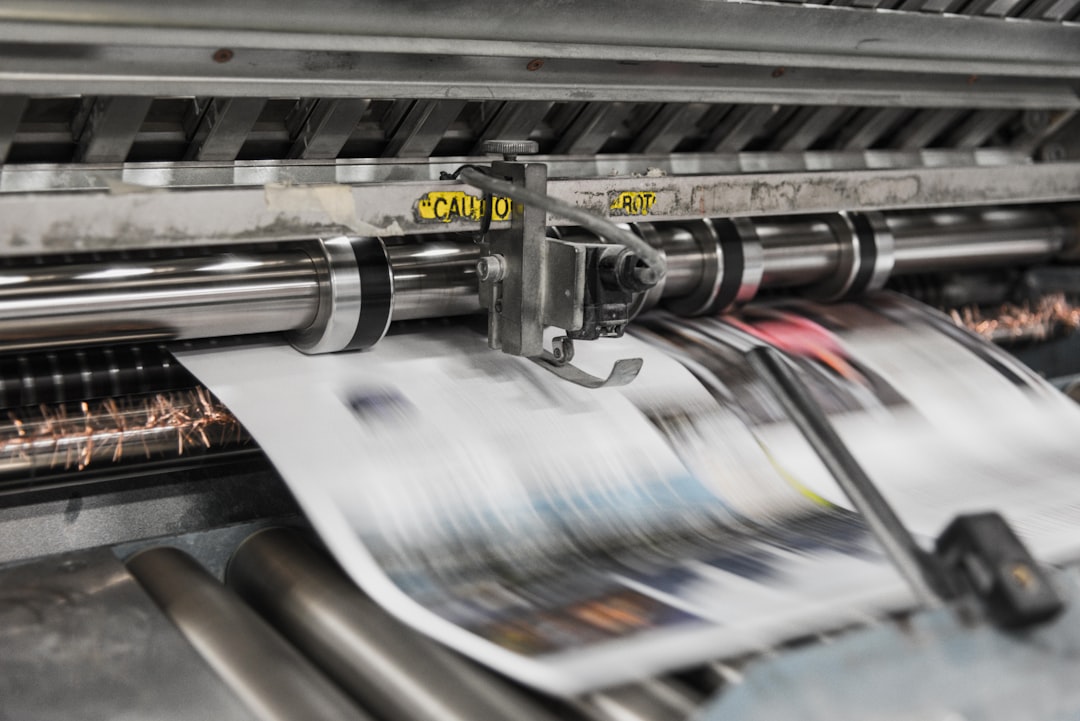
Hook: Stop losing money and time on messy licensing—build a marketplace that connects IP owners with print partners
Creators, agencies and print manufacturers alike share a modern pain: incredible graphic-novel and comic IP sits unused for print merch because licensing workflows are chaotic, royalty tracking is opaque, and B2B discovery is manual and slow. Imagine a curated, permissioned directory where rights holders like The Orangery list ready-to-license art assets and vetted print partners pick up short poster runs or scaled print orders with built-in royalty management. That’s the idea—and this article is a tactical, 2026-ready go-to-market plan to build it.
The opportunity in 2026: why now
Late 2025 and early 2026 brought several clear signals: transmedia IP studios are consolidating representation and seeking broader revenue streams (The Orangery signing with WME in January 2026 is an example), while production and publishing companies are expanding finance and strategy talent to monetize IP across formats. At the same time, print demand for collectible posters and limited-run art prints is resurging as creators and fans value physical, branded merchandise. A permissioned B2B marketplace focused on licensed poster runs sits at the intersection of these trends.
Key trends shaping the market
- Transmedia monetization: IP owners want non-dilutive revenue from posters, prints and merch without losing brand control.
- B2B discovery gap: Print designers and boutique manufacturers need vetted sources of licensed art and simplified rights clearance.
- Technology-enabled rights workflows: Royalty engines, DRM, metadata standards and permissioned catalogs make automated licensing viable in 2026.
- Agency & studio packaging: Talent and IP agencies (e.g., WME) are actively seeking merchandising partners to expand IP value.
What the marketplace does (core concept)
The product is a curated, permission-first B2B directory and marketplace where:
- IP owners (studios, creators, micro-labels like The Orangery) upload ready-for-print art assets, layered files, usage rules, and royalty terms into a controlled catalog.
- Print designers and manufacturers search by genre, print spec, and licensing terms to bid on short poster runs, seasonal drops, or ongoing wholesale arrangements.
- An integrated royalty management and payments engine automates splits, remittances, and reporting so IP owners get transparent payouts per run.
- Optionally, a white-label fulfillment path connects designers directly to partner printers for on-demand or limited press runs, with brand controls enforced by metadata and DRM.
Why a curated directory—not an open marketplace?
Open marketplaces can scale fast but they fail at two essential things for IP-driven print: trust and rights control. A curated directory offers:
- Pre-vetted print partners (quality, compliance, sustainability).
- Permissioned access and watermarked preview assets for buyers.
- Contract templates and royalty rules that maintain brand standards.
Core features: product spec for MVP
Build an MVP that solves the essential B2B friction points. Prioritize these features:
- Curated Catalog UI: Tagging by IP, title, artist, genre, allowed formats, size specs, and exclusivity windows.
- Rights Metadata & Usage Rules: Machine-readable usage fields (territory, duration, format, run size caps, exclusivity) for each asset.
- License Templates & Fast-Track Agreements: Click-to-accept short-form licenses for small runs; custom-negotiation workflows for larger deals.
- Royalty Engine: Automated calculation and distribution (pre-agreed splits, minimum guarantees, reserves for returns) with monthly statements for rights holders.
- B2B Matchmaking & RFQ: Request-for-quote system with vendor scoring and response timelines.
- Quality Assurance & Certs: Onboarding checks, sample-tracking, and a returns policy to protect IP owners’ reputation.
- Payments & Escrow: Escrow for orders, Stripe Connect or equivalent payout rails, VAT/tax handling for international orders.
- Analytics & Reporting: Sales dashboards, royalty forecasts, and SKU performance by IP owner.
Suggested tech stack (2026-ready)
Use modern, composable tools so the marketplace launches fast and scales. Recommended stack:
- Frontend: React + Vite for fast dev and component reuse.
- Backend: Node.js or Go microservices; GraphQL API for flexible queries.
- Catalog & Metadata: ElasticSearch + a headless CMS (Strapi or Sanity) to store rights metadata.
- Payments & Royalties: Stripe Connect for payouts; a royalties module (custom or third-party like RoyaltyStack) for automated splits.
- Storage & Delivery: S3-compatible storage (Backblaze or AWS) with signed URLs and watermark preview layer.
- Identity & Permissions: OAuth + role-based access; integrate 2FA for IP owner dashboards.
- Contract & DRM: eSign (DocuSign) + hashed rights ledger (optional blockchain) for immutable license proof.
- Analytics: Looker/Metabase for dashboards; Mixpanel for user funnel tracking.
Licensing workflow (actionable step-by-step)
Design the user flow to minimize back-and-forth. A recommended workflow:
- IP owner uploads art package and fills a structured rights form (territory, print size, allowed substrates, run cap, price floor, exclusivity windows).
- Platform generates a preview with watermarks and an automated license SKU (e.g., "Sweet Paprika Poster — EU, 100–500 run").
- Print partners request a quote via RFQ; the IP owner or a delegated licensing manager can approve small deals instantly via click-to-license templates.
- Order placed into escrow; printer provides samples and production timelines via the platform.
- After delivery confirmation, the royalty engine releases funds to the IP owner and factory according to the agreed split; the platform retains a marketplace fee.
- All transactions and license metadata are logged; automated monthly statements are issued to rights holders.
Royalty models and pricing—practical templates
Offer a few standardized royalty structures to reduce negotiation friction:
- Fixed % Split: e.g., 15–30% of net sale price to IP owner; marketplace takes 5–10% transaction fee.
- Per-Unit Royalty: e.g., $2.50 per poster above 250 units; ideal for high-margin limited editions.
- Minimum Guarantee + Royalty: For large print runs—printer pays MG to IP owner, royalties thereafter.
- Flat Licensing Fee: One-off buyout for specific territories or promotional runs (use sparingly; track exclusivity).
Tip: Make the royalty engine transparent—show gross sale, tax, shipping, marketplace fee, and net royalty. Transparency increases trust and repeat business.
Go-to-market: 6-phase plan
Launch in focused steps to reduce risk and build momentum.
Phase 0 — Validation (Weeks 0–8)
- Run buyer interviews with 20 print manufacturers and 20 IP owners (publishers, indie studios like The Orangery, and select creators).
- Build clickable prototypes of the catalog and RFQ flows; validate willingness-to-pay with pilot agreements.
Phase 1 — Seed Catalog & Founding Partners (Months 2–4)
- Secure 5–10 high-quality IP partners (one marquee partner helps—approach boutique transmedia studios and agencies; reference WME deals as evidence that agencies are packaging IP for licensing).
- Onboard 10 vetted print partners (specialty poster printers, museum-quality labs, eco-friendly producers).
- Run 10 pilot orders to fine-tune QA, fulfillment and royalties flow.
Phase 2 — Public Launch & Early Growth (Months 4–10)
- Launch a curated catalog with 50–100 licensed SKUs, organized as featured drops and evergreen titles.
- Targeted outreach to creative agencies and licensing managers with a one-pager and sample commission terms.
- Attend trade shows (e.g., Licensing Expo), comic cons, and art fair partnerships to showcase physical sample prints.
Phase 3 — Scale & Monetize (Months 10–24)
- Introduce advanced features (API integrations, bulk licensing, white-label fulfillment, analytics for IP owners).
- Expand international catalog and local printers for regional fulfillment to minimize shipping carbon and costs.
- Explore revenue from subscription plans for enterprise licensors and premium placement fees for designers.
Phase 4 — Platform Maturity (Year 3+)
- License archival art for museum reproductions and limited artist-signed series.
- Offer co-marketing programs with IP owners—limited drops that are promoted jointly with fan communities.
- Consider strategic partnerships with agency groups (like WME, other talent agencies) who want a managed way to monetize IP in print.
Sales & outreach playbook for onboarding IP owners
Focus on trust-first approaches—IP owners need safe, brand-protective environments.
- Target list: boutique transmedia studios, independent publishers, graphic novel imprints, and agency-managed IP catalogs.
- Outreach assets: case studies, sample royalty statements, and a “rights safety” whitepaper explaining DRM, QA and returns.
- High-conviction intro email (short) — include sample term sheet and timeline for a pilot release. Example opener: "We help studios turn existing art assets into compliant poster runs with automated royalties—no legal back-and-forth for small drops."
- Offer a low-risk pilot: one non-exclusive poster run with accelerated payments and a 30-day performance review.
- Assign a licensing concierge to each new IP owner to help package assets and set pricing.
Marketing channels that work for B2B matchmaking (practical tactics)
- Content & Thought Leadership: Publish field guides like this one, focusing on licensing best practices and print-quality standards. Use SEO keywords: "IP marketplace," "graphic novel licensing," "royalty management."
- Trade & Fan Events: Booths at Licensing Expo, Comic-Con industry days, and museum trade shows to show physical proofs.
- Agency Outreach: Private demos to IP agency business development teams; co-branded pilot programs.
- Partnerships: Integrate with print trade associations and artist collectives for credibility and a sourcing pipeline.
- Account-Based Sales: Target high-value studios and publishers with bespoke proposals and runway-based guarantees.
Compliance, legal checklist and IP protection
Protecting IP and preventing misuse are mission-critical. Include these controls:
- Structured rights metadata on each asset (no free-text ambiguity).
- Automated license generation and signed contracts stored on the platform.
- Watermarked previews and time-limited download tokens for production files.
- Audit logs and an immutable proof record (hashing files; optional blockchain anchor for high-value pieces).
- Insurance and indemnity clauses for manufacturing defects or IP misuse.
KPIs & unit economics (what to measure)
Track these metrics to prove traction and unit economics:
- GMV (Gross Merchandise Value) per month.
- Take Rate: marketplace fee as % of GMV.
- Average Order Value: typical poster run size and price.
- Time-to-license: average days from RFQ to signed license.
- Repeat Rate: % of IP owners and printers who transact more than once in 12 months.
- Support & QA Costs: per-order cost to manage samples, disputes and returns.
Example use case: The Orangery + boutique printer
"A transmedia studio with back-catalog art can convert dormant assets into recurring revenue with limited operational overhead."
Hypothetical pilot: The Orangery lists 10 limited-edition poster artworks from "Traveling to Mars." A European boutique printer requests an EU-exclusive 300-run license per title. The platform handles the license, escrow, QA sample sign-off, and post-delivery royalty split. Within 60 days, the studio receives an MG and recurring royalties as stock sells through the printer's channels. The studio gains clean reporting and brand-safe manufacturing without hiring a licensing manager.
Risks & mitigation
- IP misuse: Watermark previews, signed licenses, and sample approval gates reduce risk.
- Quality variance: Vetted partners, onboarding QA samples, and an SLA protect brands.
- Legal disputes: Pre-built contract templates and mediation clauses help settle small-value disagreements quickly.
- Scale constraints: Start regionally to optimize fulfillment and ramp up with local printers to maintain margins.
Future features & 2026+ predictions
Build the roadmap for 2026–2028 with these strategic extensions:
- API-first catalog syndication: Let retailers and D2C shops pull approved art for authorized drops.
- Dynamic pricing for scarcity: Use sales velocity and edition size to adjust royalty splits automatically.
- Creator co-ops & secondary market tracking: Monitor resale markets and share data with IP owners for downstream licensing opportunities.
- Augmented commerce: AR previews of posters on walls for retailers and buyers to boost conversion.
- Rights ledger enhancements: A standardized, cross-platform rights registry to reduce repeated clearance work across mediums.
Checklist: Launch-ready items
- Signed pilot agreements with 3 IP partners and 5 printers.
- Functional catalog with 50 SKUs and structured rights metadata.
- Payment rails and escrow setup; royalty engine integrated.
- Legal templates and sample QA process documented.
- Go-to-market one-pager, pitch deck and outreach email templates.
Actionable takeaways (start today)
- Interview stakeholders: book calls with at least 10 IP owners and 10 print partners in the next 30 days.
- Build a one-page pilot offer: 0–90 day timeline, sample royalty split, and quality SLA.
- Develop a lightweight catalog schema (artist, title, allowed uses, run caps) and test it with 5 assets.
- Secure a payment provider and prototype the royalty calculation for a sample order.
Final thoughts: why this marketplace wins
By 2026, rights holders want control, transparency and low-friction monetization routes. Print partners want clean, vetted sources of IP and standardized licensing. A curated, permissioned directory with robust royalty management, QA workflows and B2B matchmaking fixes the middle—turning dormant comic and graphic-novel art into predictable revenue streams without the legal headaches. With industry moves like The Orangery's increased representation and agencies actively packaging IP, the timing is right to build and scale this specialized marketplace.
Call to action
Ready to pilot a curated IP-for-print marketplace? Get in touch with our team at ourphoto.cloud to schedule a 30-minute GTM workshop. We’ll review your rights inventory, map a 90-day pilot, and deliver a launch checklist tailored to your IP and manufacturing partners.
Related Reading
- Pitching Transmedia IP: How Freelance Writers and Artists Get Noticed by Studios Like The Orangery
- Checklist: What to Ask Before Listing High-Value Culture or Art Pieces on Your Marketplace
- Edge Storage for Media-Heavy One-Pagers: Cost and Performance Trade-Offs
- Playbook 2026: Launching Hybrid NFT Pop‑Ups That Convert
- Build a Zelda-Themed Animal Crossing Room Using New Amiibo Furniture — Design Templates
- How to Film and Monetize Travel Pieces About Health, Addiction, or Weight-Loss Journeys ethically
- Architecting Multi‑Cloud Redundancy After Cloudflare, AWS and X Outages
- How Rising Soy Oil Fueled Soybean Gains — What Processors and Traders Need to Know
- Amiibo and IRL Collectibles: How Physical Figures Could Unlock Exclusive Football Game Items