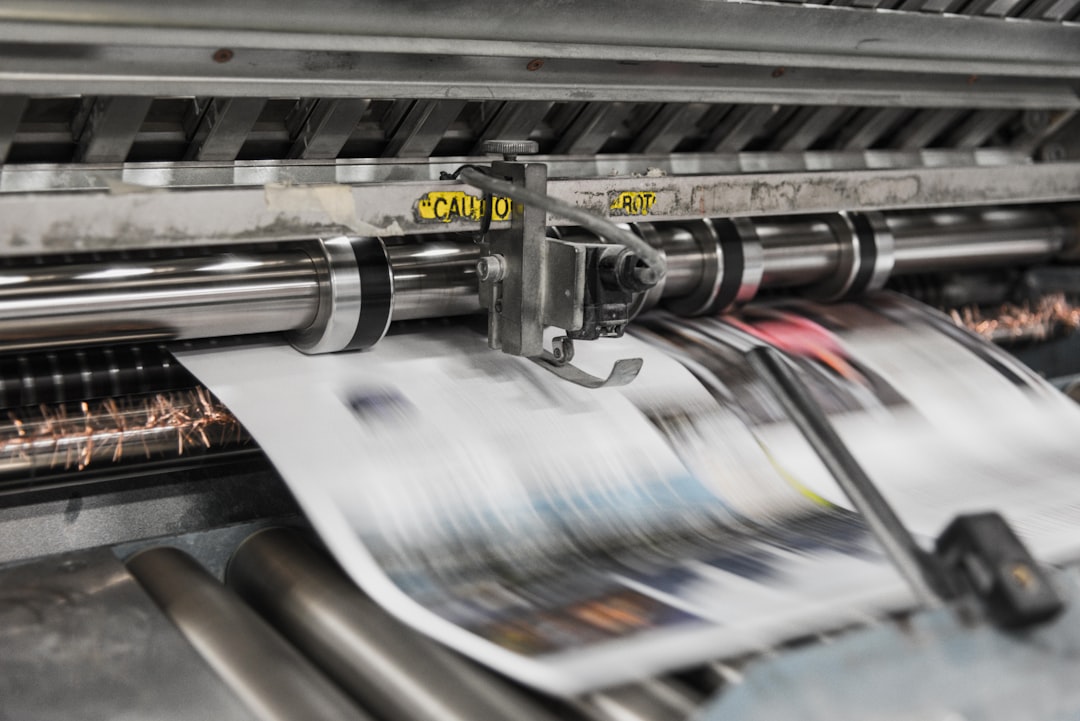
Why Print-on-Demand Is the New Inventory Model for Creators
For influencers and publishers, the old print model was always awkward: buy inventory upfront, store it, ship it, and hope demand arrives before cash gets tied up. Print-on-demand changes that equation by letting you sell posters and art prints only after a customer orders them, which means you can focus on audience growth instead of boxes in a garage. This matters even more when your content is already digital-first, because your audience discovers you through a feed, a newsletter, or a shared gallery—not a retail shelf. If you already organize your assets in a more reliable publishing environment and use higher-quality content packaging, your merch and print strategy should be just as deliberate.
The best creator businesses think like media companies, not just sellers. That means your images, illustrations, event photos, and editorial visuals can become products without a warehouse, a minimum order quantity, or a long cash cycle. In practice, this is where creator toolkits and data playbooks for creators become useful: they help you bundle, position, and price offerings based on audience behavior rather than guesswork. The goal is not to print everything, but to print the right things with minimal operational friction.
For publishers especially, print-on-demand can turn editorial art, covers, and quote graphics into a revenue stream that complements subscriptions, sponsorships, and licensing. Instead of handling production manually, you can connect your cloud photo storage, your order system, and a fulfillment partner so the workflow is almost automatic. That is the promise of modern photo product fulfillment: the image lives safely in the cloud, the buyer sees a polished storefront, and the print gets made only when there is real demand. If your business already uses structured documentation and analytics, you can build a similarly measurable print pipeline.
How the Order-to-Print Workflow Actually Works
Step 1: Store and organize source files in the cloud
Everything begins with reliable cloud photo storage. When your source files live in a well-organized system, you can avoid the classic creator nightmare of sending the wrong version, losing a final export, or hunting through old folders for a print-ready image. A strong digital asset workflow makes it easier to move quickly, especially for time-sensitive launches tied to a campaign, a seasonal collection, or a viral moment. For creators handling multiple clients, albums, or image rights, a dependable storage upgrade path matters just as much as design quality.
Think of the cloud as the source of truth. You keep the master file there, tag it with metadata, and then map it to a print SKU or product listing. This is where documentation discipline pays off, because it gives your team a repeatable naming convention, color profile notes, and release status. The cleaner your library, the easier it becomes to offer high quality photo prints without mistakes.
Step 2: Connect product listings to fulfillment partners
Once the file is organized, your commerce layer sends the order to a print partner. That partner handles production, packing, and shipping, while your storefront focuses on discovery and conversion. This is why print-on-demand is so attractive for publishers and creators: the same asset can sell as a poster, a framed print, or a fine-art paper print without you pre-buying stock. If you want to think strategically about partner selection, the logic is similar to vettng hosting partners: evaluate reliability, SLA terms, turnaround times, and quality controls.
Creators often underestimate how much operational risk is hidden in fulfillment. Packaging, shipping delays, color drift, damaged corners, and out-of-stock issues can all erode trust even when the artwork itself is strong. In that sense, learning from package insurance and transit protection helps you design a more resilient customer experience. The print partner is not just a vendor; it is part of your brand promise.
Step 3: Restore, reuse, and repurpose assets across products
A serious photo backup service does more than protect against deletion. It also creates a reusable archive that can power future products, seasonal drops, and custom collections. Suppose a publisher runs a photo essay series: one image might become a poster, another a greeting card insert, and another a premium art print. If those files are already safely backed up and easy to search, your product development speed increases dramatically. That is why creators should treat cloud photo storage and photo backup service features as revenue infrastructure, not just insurance.
For teams with large libraries, this turns into a real advantage. Instead of rebuilding assets for each campaign, you can search, filter, and repurpose what already exists. The compounding effect is similar to what publishers see when they build a strong content calendar; research-driven planning reduces wasted effort and makes the next launch easier than the last. The same principle applies to prints: if your archive is organized, product creation becomes a system rather than a scramble.
What Makes a Great Photo Product Fulfillment Setup
Reliability and turnaround time
Fulfillment speed matters, but consistency matters more. Customers forgive a slightly longer production time if communication is clear and the final print looks premium, yet they are far less forgiving when different orders arrive with different quality. A good photo product fulfillment partner should publish expected turnaround windows, holiday cutoffs, shipping options, and escalation procedures. If your audience includes fans and clients in multiple regions, your setup should also account for carrier reliability and international routing, much like air cargo routing buyers compare speed, cost, and dependability.
This is also where contingency planning becomes essential. If a printer goes offline, your business should be able to route orders elsewhere or pause a listing before customers have a bad experience. Operational resilience is not just an enterprise concern; it matters for solo creators too. Teams that study SLA and contingency design usually make better decisions about print partners as well.
Color accuracy and material quality
The most common mistake in online photo printing is assuming every image will look good on every substrate. Paper finish, coating, ink set, and frame style all change the final result. That is why you should order sample packs, test multiple paper types, and verify skin tones, shadow detail, and saturation before launching a storefront. Even if your audience is mostly digital, they will notice when an art print feels muddy, overly glossy, or cheap.
For publishers, color accuracy is especially important when a print is an extension of a recognizable brand or editorial aesthetic. If your visuals depend on consistency, your product specs should be as disciplined as the brand standards used in high-trust industries. The thinking here resembles the rigor in trust-centered interface design: clear options, predictable outputs, and fewer surprises for the user. That makes your print catalog feel premium before the customer even places the order.
Packaging, branding, and unboxing
Many creators focus only on the print itself, but packaging affects perceived value in a major way. A poster shipped in a plain tube can still delight buyers if the presentation feels intentional, protected, and on-brand. Some fulfillment partners offer branded inserts, custom sleeves, or white-label shipping, which can make even a modest product feel like a curated release. For audience-facing businesses, this is where brand trust compounds with repeat purchases.
The same logic appears in content strategy: little details often drive disproportionate engagement. A print that arrives with a clean label, a story card, or a QR code linking to the original image series can feel much more collectible. That principle matches what research on small surprises shows: unexpected details make content and products more shareable. In other words, thoughtful fulfillment turns a commodity print into a memorable fan experience.
Using Cloud Photo Storage as Your Product Command Center
Centralized organization for large libraries
If you manage thousands of photos, your product strategy will fail unless your library is searchable and clean. Good photo organization tools should support folders, tags, favorites, usage rights notes, and version control, because the same image may be used for social posts, sales pages, and print products. For photographers and visual publishers, documentation hygiene is not bureaucracy; it is speed. The faster you can find the right file, the faster you can launch a profitable product.
Cloud systems also help teams collaborate safely. Instead of sending huge attachments or relying on scattered drives, you can work from shared albums and permission-based access. That is especially helpful when art directors, editors, and clients all need to review variations before a print goes live. If you already use collaborative workflows in other environments, the same principle applies here: shared visibility creates better decisions.
Shared photo albums for approvals and launches
Shared photo albums can function as lightweight review rooms. You can create a prelaunch album for a poster series, invite collaborators, and use comments or favorites to narrow down the final selection. This approach reduces version confusion and makes the approval process feel professional rather than chaotic. It also protects your final image files because the review happens around the asset, not inside someone’s inbox.
For creators working with sponsors, galleries, or editorial teams, this can be the difference between a messy approval cycle and a repeatable launch system. If you need inspiration for better packaging and audience framing, the mechanics of public reactions are useful: people respond to what is easy to understand and emotionally coherent. A well-labeled shared album does exactly that.
Backup, restore, and version protection
One of the biggest advantages of a photo backup service is version safety. If an editor crops an image incorrectly or a designer exports the wrong resolution, you can restore the original instead of starting over. That matters for print products, because output quality depends on using the right source file. For a creator business, the cost of a lost master file is not just inconvenience; it can mean delayed sales, disappointed customers, and a damaged reputation.
In practice, backup should be part of your print pipeline, not separate from it. Store the master, the print-ready export, and the product mockup in related folders or album sets so your team can move from archive to storefront with confidence. This kind of structure mirrors the discipline in site migration and redirect management: if you preserve the structure, you preserve value.
Pricing Posters and Art Prints Without Guessing
Choose your margin model first
Pricing starts with your business model, not your aesthetic. Some creators want accessible fan merchandise with modest margins and high volume, while others want premium art prints that support gallery-level pricing. Before setting a retail price, calculate production cost, shipping, packaging, transaction fees, and your desired profit. A profitable listing is not the one with the highest sticker price; it is the one that the market will buy repeatedly without destroying your brand position.
Creators who want to test demand can use the same mindset as those who explore prediction tools for small sellers: start with low-risk data, not assumptions. Launch a few products, compare conversion rates, and adjust based on actual order behavior. This is especially useful for publishers with strong audiences but uncertain merch demand.
Use format tiers to serve different buyers
A smart catalog usually has at least three tiers. The entry tier might be an unframed poster, the middle tier a premium paper print, and the top tier a framed or limited-edition piece. This gives buyers choices without forcing you into a one-size-fits-all offer. It also lets you segment casual fans from collectors, which can improve average order value over time.
You can see similar tiering logic in other markets where shoppers want both value and premium options. For example, product strategists often study brand battles in activewear because price ladders and positioning shape consumer behavior. For prints, that means one image can power multiple price points if your fulfillment partner supports different sizes and finishes.
Limit editions only when scarcity is real
Limited editions work when they are meaningful, not artificial. If you promise 50 copies, use a fulfillment setup that can actually cap production and track fulfillment accurately. Scarcity can increase urgency, but fake scarcity damages trust fast, especially with sophisticated audiences. Publishers and influencers who build reputations around honesty should treat edition counts as a serious commitment.
That is also where your catalog narrative matters. A numbered print tied to a story, campaign, or milestone has more value than a random decorative image. If you want a model for how narrative creates collectability, look at how collectibles become wearable art. The lesson is simple: context adds value.
How to Build a Creator-Friendly Print Catalog
Start with assets your audience already loves
The best products often come from existing audience signals. If a post, cover image, or event photo already performed well in comments or shares, that is a strong candidate for a print product. You are not trying to invent demand from scratch; you are trying to convert admiration into ownership. When you use shared photo albums and cloud tagging well, these proven assets are easy to identify.
In media strategy, this is similar to finding high-performing formats and doubling down. A strong editorial team knows that not every idea deserves a product launch, and the same is true for print. Use audience feedback, saves, and DMs as signals, then validate with samples before scaling.
Design for discoverability and story
Every print listing should do more than show the image. It should explain why the piece exists, what makes the image meaningful, and how it fits into a larger collection or theme. That context helps buyers decide whether the print belongs in their space. It also helps your storefront feel editorial rather than generic, which is a major advantage for publishers and brands.
If you need a framework for making content more quotable and memorable, short, quotable lines are a useful model. Apply that idea to product descriptions: one strong sentence can anchor the emotional value of the print, while the rest of the description covers dimensions, materials, and shipping details.
Build collections, not random uploads
A collection approach makes your store feel curated. Instead of uploading one-off images, group prints into themes such as city nights, behind-the-scenes portraits, cover art, or seasonal visual essays. This creates a better browsing experience and makes cross-selling more natural. Collections also help you reuse the same print fulfillment infrastructure for new releases without reinventing the catalog each time.
Editorial teams already know the power of packaging content as a series. The logic behind live-plus-evergreen publishing applies neatly here: a timely launch creates urgency, while evergreen art prints keep selling long after the campaign ends. That mix gives your print business both momentum and durability.
Quality Control: The Step Most People Skip
Order samples like a customer, not like a founder
Before launching anything, order your own prints through the same fulfillment path your customers will use. This reveals issues that mockups hide: paper weight, sharpness, border sizing, frame fit, and packaging protection. You should compare the sample to your digital file on a calibrated screen and note whether any adjustments are needed. Even a small shift in brightness or contrast can make the difference between a premium art print and a disappointing one.
For businesses shipping higher-value items, thinking through transit risk is essential. A damaged print can trigger refunds, replacements, and negative reviews, so your QC process should include packaging tests and carrier audits. That is why lessons from package protection are so relevant to creators. Protecting the item in transit is part of product design.
Build a print spec sheet
A print spec sheet keeps your operations team aligned. Include file dimensions, color profile, safe margins, bleed requirements, paper type, framing options, and approved crop rules. If you work with multiple printers, the spec sheet should also note partner-specific requirements so you do not accidentally export the wrong version. This is one of the easiest ways to reduce waste and customer complaints.
Spec sheets also support scale. When your catalog grows from five prints to fifty, documentation becomes a force multiplier. If you have ever seen how complex systems depend on measured standards, the idea is similar: define the variables, and quality becomes easier to control.
Measure returns, not just revenue
Revenue is important, but it is not the whole story. You should monitor reprints, damage claims, support tickets, delivery times, and refund rates by product type and partner. If one paper stock produces more complaints, or one routing path leads to delays, your data should reveal it quickly. In print commerce, the cheapest option is not always the best option once replacements and customer trust are considered.
This is where a content-creator mindset helps. Good creators already know how to iterate using performance signals, whether that is watch time, CTR, or subscriber feedback. Apply the same habit to your print business, and you will improve faster than sellers who treat fulfillment as a black box.
Real-World Use Cases for Influencers and Publishers
Influencers: monetize identity and visual style
Influencers have a natural advantage because their audience already associates them with a visual identity. That identity can become a poster series, a photography collection, or a limited-edition art print line. The strongest products feel like an extension of the creator’s worldview, not a random side hustle. If the creator also uses a cloud photo storage system, it becomes easier to locate the right campaign images, branded portraits, and behind-the-scenes shots for productization.
For influencers who publish frequently, print-on-demand is also a flexible way to test monetization without overcommitting. You can launch a small collection, measure engagement, then add new variants as demand becomes clear. This is similar to how smart marketers use promotion testing to optimize offers before scaling.
Publishers: extend editorial assets into commerce
Publishers can turn cover art, feature photography, and editorial illustrations into revenue-generating prints. This works especially well when the audience has strong affinity for the publication’s aesthetic or subject matter. Think of a magazine with iconic covers, a cultural newsletter with original illustration, or a travel publisher with striking destination photography. The print product becomes both a collectible and a way to deepen reader loyalty.
The publisher advantage is editorial credibility. If your visual assets already tell a story, your product descriptions, landing pages, and email campaigns can reinforce that story instead of inventing one. That is why publishers should study event coverage frameworks and treat product launches like editorial moments, not just store updates.
Families, clients, and communities: permissioned sharing before selling
Sometimes the best commercial use of photos starts with simple sharing. Shared photo albums let families, clients, and communities review, approve, and celebrate images before they ever become products. This is useful for portrait sessions, wedding galleries, local events, and community projects where multiple stakeholders need visibility. A good shared album experience builds trust, and trust often leads to print sales later.
If your workflow already includes collaborative feedback, your print catalog will be easier to launch because approvals happen upstream. That is the same reason creators who manage communities well tend to sell better: they understand how to translate engagement into action. For more on collaboration choices, see how to evaluate collaboration partners with metrics instead of vibes.
Implementation Checklist: Launch Your No-Inventory Print Business
1. Organize your source library
Audit your cloud photo storage and identify your best assets. Tag the images by theme, product potential, and usage rights. Make sure you have master files, print-ready exports, and backup copies, because a photo backup service is your safety net when a product suddenly takes off. If your archive is messy, fix that before you build listings.
2. Choose a fulfillment partner and test it
Order samples, check packaging, and compare paper types. Verify production times, shipping estimates, and support responsiveness. If you are considering multiple vendors, use a scorecard that mirrors the rigor of partner vetting and contingency planning. The cheaper printer is not a win if it creates avoidable support work.
3. Build your catalog and launch with intent
Create a small number of well-positioned products rather than flooding the market. Write clear descriptions, use strong mockups, and connect each listing to a story or collection. If your launch is tied to a campaign, coordinate your email, social, and storefront timing so the audience sees the product as a natural extension of your content.
4. Track performance and improve
Watch conversion rates, refund rates, shipping complaints, and repeat purchases. Use these insights to refine materials, pricing, and product mix. If one image becomes a bestseller, consider adjacent formats such as larger sizes, framed versions, or companion prints. Over time, your print store should become a living extension of your cloud archive, not a separate chore.
Pro Tip: Your first win is not max revenue; it is a repeatable system. Once your cloud library, shared album workflow, and fulfillment partner are aligned, every new print launch becomes dramatically easier.
Table: Choosing the Right Fulfillment Model for Your Print Business
| Model | Best For | Upfront Cost | Inventory Risk | Control Level |
|---|---|---|---|---|
| Print-on-demand | Influencers, publishers, and creators testing demand | Low | Very low | Moderate |
| In-house inventory | Established brands with predictable volume | High | High | High |
| Hybrid fulfillment | Teams wanting premium runs plus flexible replenishment | Medium | Medium | High |
| Local print partner | Regional campaigns and fast turnaround needs | Low to medium | Low | Medium |
| Marketplace retailer | Broad distribution with less brand control | Low | Very low | Low |
Frequently Asked Questions
Can I sell posters and art prints without keeping any inventory?
Yes. Print-on-demand lets you list products only after files are ready and a fulfillment partner is connected. You do not have to pre-buy posters, store boxes, or manage unsold stock. That makes it ideal for creators and publishers who want to test demand before committing capital.
What kind of files should I store in cloud photo storage for printing?
Keep master files, print-ready exports, and mockups in your cloud system. Use high-resolution images with the correct color profile and bleed settings when required. A strong photo backup service also protects the original versions so you can restore or re-export if needed.
How do shared photo albums help with print sales?
Shared photo albums make approvals easier when multiple people need to review assets. They also help families, clients, or editorial teams confirm which images should be turned into products. This reduces errors and speeds up launch decisions.
What should I look for in a fulfillment partner?
Look for consistency, quality control, turnaround time, packaging standards, shipping options, and support responsiveness. Ask for sample products and compare paper, color, and protection in transit. If you plan to scale, choose a partner with reliable systems and clear service expectations.
Is print-on-demand good for premium art prints?
Yes, if the partner offers high quality photo prints, strong materials, and dependable color accuracy. Premium pricing works best when the product feels collectible and well-produced. Always test samples before positioning a print as fine art or a premium collector item.
How do I avoid messy file organization as my library grows?
Use naming conventions, tags, and clear folder structures from the start. Keep a documented workflow for exports, approvals, and final products so your archive remains searchable. Good photo organization tools save time and reduce mistakes as your catalog expands.
Conclusion: Turn Your Photo Library Into a Product Engine
For influencers and publishers, the smartest print business is no longer the one with the biggest storage room; it is the one with the cleanest workflow. When you combine cloud photo storage, a reliable photo backup service, shared photo albums, and the right photo product fulfillment partner, you can sell posters and art prints without carrying inventory or taking warehouse risk. The result is a business that moves as fast as your content does, while still delivering tangible products people want to display, gift, and collect.
The opportunity is bigger than a side hustle. With the right systems, your existing photo library becomes a durable commerce engine, your audience gets high quality photo prints with minimal friction, and your brand gains another way to monetize attention responsibly. That is the real power of online photo printing built on modern storage and fulfillment infrastructure. If you want to keep building, explore collectible product thinking, memorable product details, and maximizing creator tools to make each launch smarter than the last.
Related Reading
- Buffett-Grade One-Liners: How to Craft Quotable Wisdom That Builds Authority - Learn how sharp phrasing improves product pages and creator branding.
- Why Low-Quality Roundups Lose: A Better Template for Affiliate and Publisher Content - A useful framework for stronger merchandising content.
- Build a Research-Driven Content Calendar: Lessons From Enterprise Analysts - Plan launches with more structure and less guesswork.
- How to Protect Expensive Purchases in Transit: Choosing the Right Package Insurance - Improve shipping confidence for premium print orders.
- The Smart Way to Pick a Collab Partner: Metrics Every Streamer Should Check - Choose better creative and business partners for your print projects.