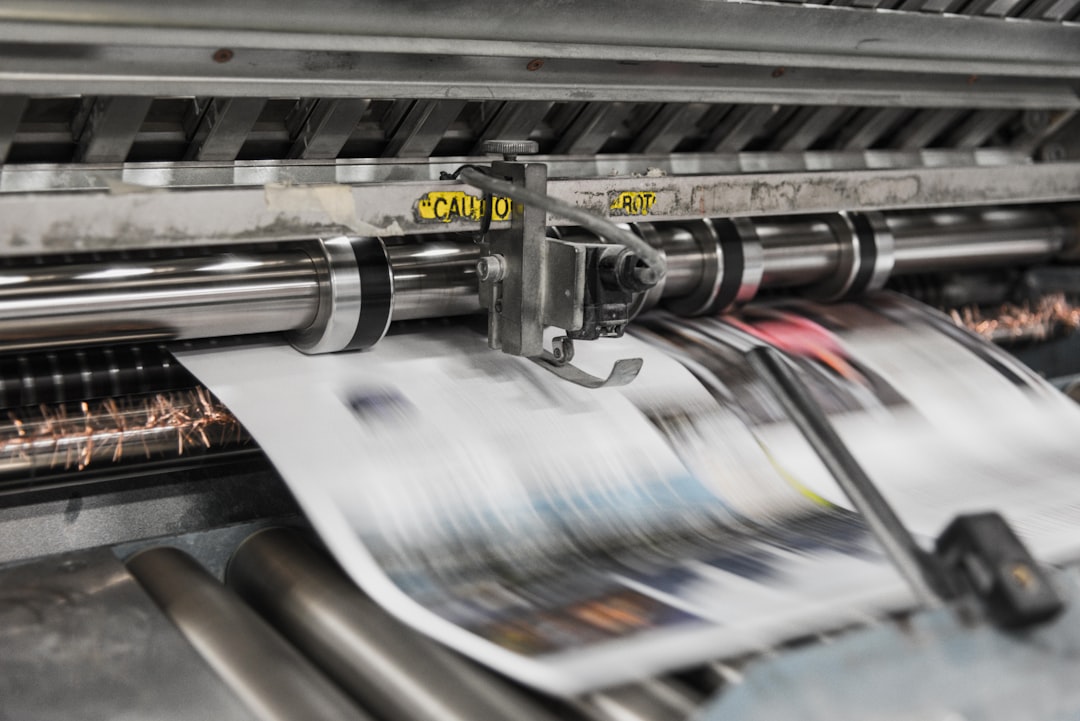
Why publishers need a better reprints and poster fulfillment model
Publishers, media brands, and content-driven organizations are under growing pressure to move faster without sacrificing quality. Readers expect premium reprints, collectible posters, and art prints to ship quickly, arrive in perfect condition, and match the original file exactly. At the same time, teams are working with more assets, more campaigns, and more channels than ever, which makes manual workflows a hidden cost center. That is why photo product fulfillment has become less of a “nice extra” and more of a core operational decision, especially when paired with strong cloud photo storage and a dependable photo backup service.
The challenge is not simply finding a printer. The real work is selecting a print partner that can integrate with your publishing systems, enforce quality control, and keep costs predictable as volume changes. If you are also managing large creative libraries, editorial archives, or client-facing assets, your partner should support photo organization tools, secure access, and on-demand distribution. This is where publishers can borrow lessons from operational playbooks like selecting a 3PL provider and apply them to print fulfillment: treat the vendor as part of your production stack, not just a supplier.
In this guide, we will walk through how publishers can streamline reprints and poster fulfillment with print partners, reduce lead times, and maintain print quality across every order. We will cover vendor selection, integration requirements, quality controls, pricing structures, and the organizational habits that keep reprints from becoming a bottleneck. If your team already relies on cloud storage optimization to keep media accessible, the next step is making sure the same discipline extends from archive to press.
What publishers should expect from a modern print partner
Fast turnaround without sacrificing consistency
In publishing, turnaround time is not only a customer service metric; it is a revenue lever. A responsive print partner can reduce the lag between content performance and merchandising, which is especially important for trending stories, seasonal campaigns, and event-driven content. The best partners offer print-on-demand, automated proofing, and production visibility so that your team can act quickly without hand-holding every file. This matters because every extra day in the workflow adds the risk of a missed marketing window, a stale campaign, or an unhappy buyer.
Speed, however, should never come at the expense of repeatability. A poster that looks great on a sample order but shifts in color on bulk runs creates returns, complaints, and brand damage. That is why publishers should look for documented process controls, substrate consistency, and clear escalation paths when output drifts. In practice, this is similar to the discipline described in benchmarks that matter: do not judge a provider by marketing claims, judge them by measurable output under real conditions.
Deep catalog support for reprints and posters
Not every print partner is built for editorial or media products. Some are optimized for basic consumer photo prints, while others handle wall art, gallery posters, zines, and reprint editions with better finishing options. Publishers should prioritize vendors that support multiple sizes, premium papers, borderless printing, archival inks, and protective packaging. The ability to fulfill both small-run reprints and larger poster campaigns from the same system reduces fragmentation and simplifies procurement.
If your catalog is expanding, your vendor should be able to keep pace without forcing a replatform. That includes SKU flexibility, custom dimensions, and batch-level workflows that support different trim rules or paper types. A strong partner also understands how to handle assets pulled from a broader content archive, which is where robust asset monetization workflows can be useful: every deliverable should move from stored file to sellable product with minimal friction.
Brand-safe presentation and customer experience
For publishers, the print experience is part of the brand experience. Packaging inserts, storefront presentation, proofing pages, and post-purchase emails should feel consistent with your editorial identity. When your print partner exposes generic or cluttered customer interfaces, you lose control over perception. A better setup allows you to create a branded ordering experience that feels native to your publication, which supports repeat purchases and collector loyalty.
That kind of brand continuity also reduces confusion when buyers compare formats or editions. Think of it as a continuation of your editorial voice into physical product. The same principle appears in heritage brand relaunches, where identity, consistency, and trust are just as important as the product itself. For publishers, print fulfillment is a channel that should reinforce authority, not dilute it.
How to evaluate vendors: the selection framework publishers should use
Production capability and print quality control
Start with the basics: materials, color management, finishing, and proofing. Ask vendors how they calibrate devices, how often they run color checks, and whether they can provide reference prints or standardized proofs. You want a partner that can explain its quality control process in plain language, not one that hides behind vague claims of “premium quality.” If a vendor cannot describe how it prevents banding, color shifts, or crop errors, that is a warning sign.
It is also worth testing how the provider handles edge cases. Send a file with fine typography, dark gradients, and a large photographic area; then compare outputs across sizes. A reliable partner will show consistency in black density, image sharpness, and paper behavior. In high-volume environments, small defects compound quickly, so build your evaluation around the same rigor used in ROI evaluations: the cheapest vendor is rarely the cheapest after reprints, support time, and refunds.
Order integration and automation readiness
For publishers, a print vendor’s API or order integration layer is often more important than its storefront polish. If the partner can accept orders directly from your CMS, DAM, e-commerce platform, or fulfillment middleware, your team saves time and reduces manual errors. Look for webhook support, order status callbacks, address validation, SKU mapping, and the ability to sync inventory or product variants automatically. The smoother the integration, the less your team has to touch each order.
This is especially important when campaigns have short lifecycles. A breaking news illustration, limited-edition poster, or anniversary reprint may only be relevant for a narrow window. Strong order integration lets you move from publish to purchase faster, which is similar to the advantage described in workflow automation for content teams. The goal is to remove repetitive handoffs so your staff can focus on editorial judgment rather than administrative tasks.
Fulfillment network, geography, and resilience
Lead time is not just a function of print speed; it also depends on where items are produced and how they are routed. A vendor with distributed fulfillment centers can cut shipping time and reduce zone-related cost spikes. Publishers serving national or international audiences should ask where print production happens, how rush orders are prioritized, and what backup routing exists when a facility is at capacity. This is the print equivalent of nearshoring and exposure management: geographic resilience matters when demand spikes or disruptions hit.
Resilience also means operational continuity. If one site has a paper shortage, machine outage, or staffing issue, can orders be rerouted automatically? Can the partner communicate exceptions before they become customer complaints? These questions may sound operational, but they directly affect brand trust and refund rates. A mature provider will have contingency plans and visible SLAs, not just promises of “fast shipping.”
Integration architecture: how publishers should connect content to commerce
From archive to storefront
The most efficient publishers treat their print products as a downstream extension of their media library. That means assets should live in a searchable repository with metadata, rights data, usage restrictions, and product-ready dimensions attached. If your archive is disorganized, every new product becomes a scavenger hunt. Strong cloud photo storage and photo organization tools are not just operational conveniences; they are revenue enablers.
When the workflow is designed well, an editor or merch manager can select an approved image, generate print-ready variants, and push them into a product feed without waiting on technical support. The best systems also retain version control so a corrected crop or updated caption does not overwrite the original license record. In this model, your archive becomes a source of commerce, not a static vault. That lowers time-to-launch for posters and reprints, and it makes recurring products much easier to manage.
Metadata, rights, and licensing guardrails
Publishers should never underestimate the importance of metadata hygiene. Every image used in a reprint or poster should carry rights status, credit requirements, expiration dates, and any territorial restrictions. Without that layer, your team risks unauthorized use, duplicate product creation, or a customer dispute after sale. The right systems help enforce those rules at the point of product creation rather than after the fact.
Strong permissions are particularly important for editorial archives, contributor work, and licensed imagery. This is where the discipline seen in privacy and trust frameworks becomes relevant: a good system limits exposure, clarifies access, and reduces the chance of misuse. Publishers should prefer vendors and platforms that support role-based permissions, audit logs, and clear handoff documentation so that content provenance remains intact throughout the lifecycle.
Automation rules that reduce manual work
Once your archive and storefront are connected, use automation to standardize the repetitive steps. For example, create rules for image sizing, bleed allowances, file naming, proof creation, and product publication. Use templates for recurring poster sizes and reprint formats so every new item does not require rebuilding the same configuration from scratch. Automation should feel like a guardrail, not a shortcut; it exists to preserve quality while reducing touchpoints.
Publishers that manage many releases can borrow the same logic that powers scheduled workflows. Set triggers for seasonal drops, issue anniversaries, or editorial milestone dates, and let the system queue production-ready orders when a campaign goes live. That is how you shorten lead times without increasing chaos. It also creates a more predictable operating rhythm for marketing, operations, and customer support.
Cost control: where publishers actually save money
Reduce reprints by tightening specs
The fastest way to increase print costs is to allow ambiguity in file specs. If one team exports at the wrong resolution, another uses an incompatible color profile, and a third forgets bleed margins, you will pay for rework. A strong partner should provide a clear file intake checklist, automatic preflight checks, and visual warnings before production begins. That upfront discipline reduces reprints and protects margin.
It is useful to think like a publisher and an operator at the same time. The editorial team wants a visually stunning poster, while operations wants a reliable file that can print cleanly at scale. Both goals can be satisfied if you standardize the workflow and reduce interpretation. In the same way that smart purchase timing improves acquisition economics, careful spec discipline improves the economics of every order.
Use volume tiers and SKU rationalization
Print partners often price based on size, substrate, run count, and shipping zone, which means too many variations can quietly inflate overhead. Publishers should consolidate SKUs whenever possible and reserve custom formats for products with proven demand. This not only simplifies procurement but also creates cleaner reporting on what sells. If you can identify your top five poster sizes and top three paper types, you can negotiate more effectively and keep production predictable.
Do not ignore packaging and insert costs either. A premium print can still become unprofitable if the packout is oversized or the fulfillment partner charges for every extra handling step. Compare the total landed cost, not just the unit price, and include expected support tickets, replacements, and reshipments. The most useful financial model is the one that mirrors real customer behavior, not the one that looks best in a quote sheet.
Inventory-light, demand-driven fulfillment
For many publishers, print-on-demand is the best way to control risk. Instead of betting on inventory that may never sell through, you produce only when demand exists. That lowers storage costs, protects cash flow, and reduces obsolescence when content trends fade. It also creates a cleaner path for long-tail products like archive reprints and evergreen posters.
Demand-driven fulfillment is especially powerful for media brands with strong niche communities. Small but passionate audiences may not buy in bulk, yet they will pay for high-quality items that feel curated and scarce. This is why publishers should study models like micro-fulfillment for creators, where flexibility often beats scale. When demand is unpredictable, agility is a competitive advantage.
Quality control systems that protect the brand
Proofing before production
Every publisher should establish a proofing gate before print jobs are released. That gate can include a digital proof, a hard proof for premium items, and a final sign-off from the editorial or merch lead. The cost of a proof is minor compared with the reputational cost of shipping a flawed poster to hundreds of customers. Make sure your print partner supports proof workflows that are fast enough not to slow the business down.
For recurring products, store approved proofs alongside the source files and order history. That way, when you reorder or scale a campaign, you can compare output against a known baseline. The process becomes less subjective and more operationally reliable. If you want to see how consistent benchmarking improves decision-making elsewhere, the logic is similar to observability-driven tuning: measure, compare, and correct before the customer notices a problem.
Sampling and batch audits
Not every order needs exhaustive inspection, but every production run should be eligible for sampling. Ask the provider how it audits batches, what defect thresholds trigger reprints, and whether it documents common failure modes. Publishers handling premium reprints or collector posters should especially care about fading, cropping, edge damage, and inconsistent trim. Clear audit rules create accountability and help isolate issues before they spread.
Sampling is also the right moment to verify packaging performance. A perfect print is still a bad customer experience if it arrives bent, scuffed, or water-damaged. Evaluate the outer mailers, corner protection, and any internal wrap the partner uses. In print fulfillment, “last mile” is not a buzzword; it is the moment quality either survives or fails.
Escalation, replacements, and customer support
No fulfillment system is perfect, so your partner’s exception handling matters as much as its happy-path performance. Publishers should ask how damaged items are documented, how quickly replacements are authorized, and whether support can trace an order from file receipt to doorstep. If customers report a problem, your team should not have to rebuild the story from scratch. Visibility into the order lifecycle is essential for fast, fair resolution.
This is where good partners feel like an extension of your team. They help preserve customer trust by making remediation simple and fast. They also reduce the burden on your staff by keeping records clean enough to answer questions quickly. Think of it as operational empathy: a good system acknowledges that mistakes happen and makes recovery efficient.
How cloud storage and organization improve fulfillment performance
Single source of truth for assets
For publishers, the biggest hidden cost in print fulfillment is not the printer fee; it is file confusion. Multiple versions of the same image, competing captions, and unclear naming conventions all increase the risk of using the wrong asset. A centralized repository with version history and permissions turns chaos into a searchable workflow. This is where cloud photo storage and robust indexing become strategic tools rather than background utilities.
When everything lives in one governed system, merchandising teams can move faster with less anxiety. They know which file is approved, which crops are valid, and which rights are active. That improves speed, but it also lowers operational risk across reprints and posters. It is a straightforward way to make creative archives useful instead of merely safe.
Tagging, search, and reuse
Good photo organization tools help publishers find the right image for the right format at the right time. Tag by issue, date, subject, photographer, license type, aspect ratio, and product suitability. Then combine search with filters so the merch team can surface “poster-ready” or “reprint-approved” assets instantly. Without that layer, even great archives become bottlenecks.
Reuse is where the real payoff appears. Once your system can reliably identify evergreen assets, you can build poster collections, anniversary editions, and seasonal reprints with very little overhead. The work shifts from hunt-and-peck to curation. That is a meaningful strategic advantage for publishers whose back catalog is more valuable than their latest upload.
Backup and restore as operational insurance
Every publisher should treat a photo backup service as business continuity infrastructure. Files can be overwritten, moved, mislabeled, or accidentally deleted during busy production cycles. If your print partner needs to regenerate an order quickly, a reliable backup reduces delays and protects timelines. It also gives your team confidence to move faster because recovery is possible.
For teams with large archives, backup policy should include retention rules, access controls, and restoration testing. A backup that exists only in theory is not enough. If you can restore a file in minutes instead of hours, you protect campaign momentum and customer trust. That is why photo backup service planning should sit alongside vendor selection, not after it.
Publisher workflow blueprint: from upload to doorstep
Step 1: Prepare and approve the asset
Start by choosing the final image, validating rights, and checking the resolution against the intended size. Confirm color space, trim, bleed, and safe area before export. Then attach product metadata such as title, edition number, and description. The more complete the file packet, the fewer surprises later in the pipeline.
At this stage, a shared checklist is invaluable. It should live where editors, designers, and merch managers all can see it, not buried in one person’s inbox. A clear handoff prevents rework and ensures that every poster or reprint starts from an approved baseline. The best publishers treat this as standard operating procedure, not a one-off task.
Step 2: Route the order through your integration
Once the asset is ready, publish it through the commerce layer or send it through your API to the print partner. Map fields carefully so the right size, paper, and shipping method are selected automatically. If you support multiple storefronts or campaigns, use rules to keep each product tied to the correct fulfillment logic. This is where order integration becomes a direct driver of speed.
Consider building exception flags for unusual jobs such as oversized posters, signed editions, or international destinations. Those orders may need manual review even if standard products do not. By separating normal from exceptional work, you keep the pipeline efficient without losing control. That balance is what makes scaling possible.
Step 3: Inspect, ship, and learn
After production, track the order from print completion to delivery, and log any defects or delays. Use those records to spot recurring issues by SKU, geography, or substrate. Over time, this creates a feedback loop that improves vendor performance and helps you negotiate better terms. Data should not just document the past; it should shape the next order.
Publishers that build this loop usually see fewer surprises and stronger margins. They know which jobs deserve a premium paper, which packaging methods reduce damage, and which production centers perform best. That operational memory is often what separates a reactive team from a truly scalable one.
Comparison table: choosing the right fulfillment model
| Model | Best for | Lead time | Cost control | Quality consistency |
|---|---|---|---|---|
| In-house printing | Very low volume, controlled environments | Fast for local jobs, slower at scale | High fixed costs | Can be excellent, but staff-dependent |
| Single print partner | Simple catalogs and consistent products | Usually predictable | Good if volume is stable | Good, but vulnerable to disruption |
| Distributed print-on-demand network | National or international publisher shops | Often fastest overall | Strong on inventory risk reduction | Depends on standardization and audits |
| Hybrid model | Premium editions plus long-tail products | Varies by SKU | Best when routed intentionally | Strong if rules and proofs are enforced |
| Marketplace-only fulfillment | Testing demand quickly | Convenient but less controlled | Easy to start, harder to optimize | Mixed; limited brand control |
Implementation checklist for publishers
What to ask during vendor selection
Before signing anything, ask for sample outputs, SLA language, escalation paths, and references from similar publishers. Confirm the exact file formats, size tolerances, and proofing rules they support. Make sure the pricing model spells out setup fees, reprint policies, packaging charges, and shipping costs. If those details are vague now, they will be painful later.
You should also ask about integration depth. Can the partner accept orders programmatically? Can it update order states back to your system? Can it handle retries and failed address validation cleanly? These questions save time because they reveal whether the vendor is truly operationally mature.
How to reduce risk in the first 90 days
Start with a limited SKU set and use it to validate the partner’s process end to end. Track cycle time, defect rate, support tickets, and customer satisfaction before expanding. Then introduce more sizes or premium items once the workflow is stable. This staged rollout lowers risk and creates a clearer benchmark for future scaling.
Use the first 90 days to refine metadata, packaging, and approvals. Small adjustments early can save large costs later. The goal is to build a repeatable system, not a one-time launch. That is the practical difference between trying a print partner and operationalizing one.
What to measure every month
Publishers should review production time, ship time, defect rate, refund rate, landed cost, and reorder frequency. Add file-prep errors and manual intervention rate if you want a true picture of workflow health. These metrics tell you whether the partner is helping you scale or simply processing orders. If a metric worsens, investigate whether the issue is file quality, routing, vendor performance, or internal process drift.
Monthly reporting also strengthens vendor conversations. You can negotiate from facts instead of impressions, which improves both accountability and pricing power. Over time, that data becomes one of your most valuable operations assets. It tells you where your print business is profitable, where it leaks, and where a better partner could unlock growth.
FAQ: publisher reprints and poster fulfillment
How do publishers choose between print-on-demand and inventory?
Use print-on-demand for long-tail products, uncertain demand, and rapidly changing content. Use inventory only when you have predictable volume, enough margin to justify storage, and confidence that the product will not go stale quickly. Many publishers do best with a hybrid model.
What matters more: speed or quality?
Quality should be non-negotiable, but speed matters when you are selling to a live audience or reacting to a news cycle. The right vendor is the one that can deliver both within a predictable SLA. If a provider is fast but inconsistent, the hidden cost usually outweighs the gain.
How can publishers reduce reprints?
Use strict file specs, automated preflight checks, proof approval, and standardized templates. Most reprints come from preventable issues like wrong dimensions, poor resolution, or missed bleed. Build guardrails early and use them consistently.
What should be included in a fulfillment integration?
At minimum, include order submission, SKU mapping, status updates, address validation, exception handling, and notifications. For larger teams, add webhooks, analytics, and failover routing. The deeper the integration, the less manual work your team needs to do.
How do cloud storage and backups help print operations?
They give your team a single source of truth, reduce file confusion, and make restoration fast if an asset is deleted or overwritten. That matters because reprints often depend on quickly retrieving approved files. A dependable archive is a core part of print fulfillment resilience.
How can publishers protect brand quality across vendors?
Standardize proofs, color expectations, packaging requirements, and escalation rules. Then audit batches and track defects by SKU and print site. Brand quality is much easier to protect when every partner follows the same playbook.
Conclusion: build a fulfillment system, not just a print relationship
Publishers that want to scale reprints and poster fulfillment need more than a supplier with good prices. They need a partner that can integrate with their systems, support quality control, protect rights and metadata, and adapt as demand changes. When you combine reliable cloud photo storage, a disciplined photo backup service, and clear order integration, the production workflow becomes much easier to manage. That is how publishers turn physical products into a dependable extension of their editorial and audience strategy.
The real win is operational clarity. With the right vendor, your team spends less time hunting for files, correcting orders, and chasing support tickets. You get faster lead times, lower error rates, and a cleaner customer experience. And because your archives are organized and your rules are automated, you can launch more products without increasing chaos. For publishers serious about photo product fulfillment and online photo printing, that is the difference between reactive logistics and a scalable print business.
As you refine your stack, keep learning from adjacent operational disciplines like event coverage frameworks, micro-fulfillment, and observability-driven tuning. The best fulfillment systems are built with the same mindset: measure what matters, remove friction, and keep the customer experience consistent from first click to final delivery.
Related Reading
- Small, Flexible Supply Chains for Creators - Why micro-fulfillment can outperform bloated inventory models.
- Optimizing Cloud Storage Solutions - Trends that improve archive performance and access.
- Selecting a 3PL Provider - A practical checklist for operational vendor evaluation.
- How Neighborhood Data Can Help You Choose the Right Home - A useful lens for smarter search and organization.
- Seed Keywords to UTM Templates - How teams can automate repetitive workflow steps.