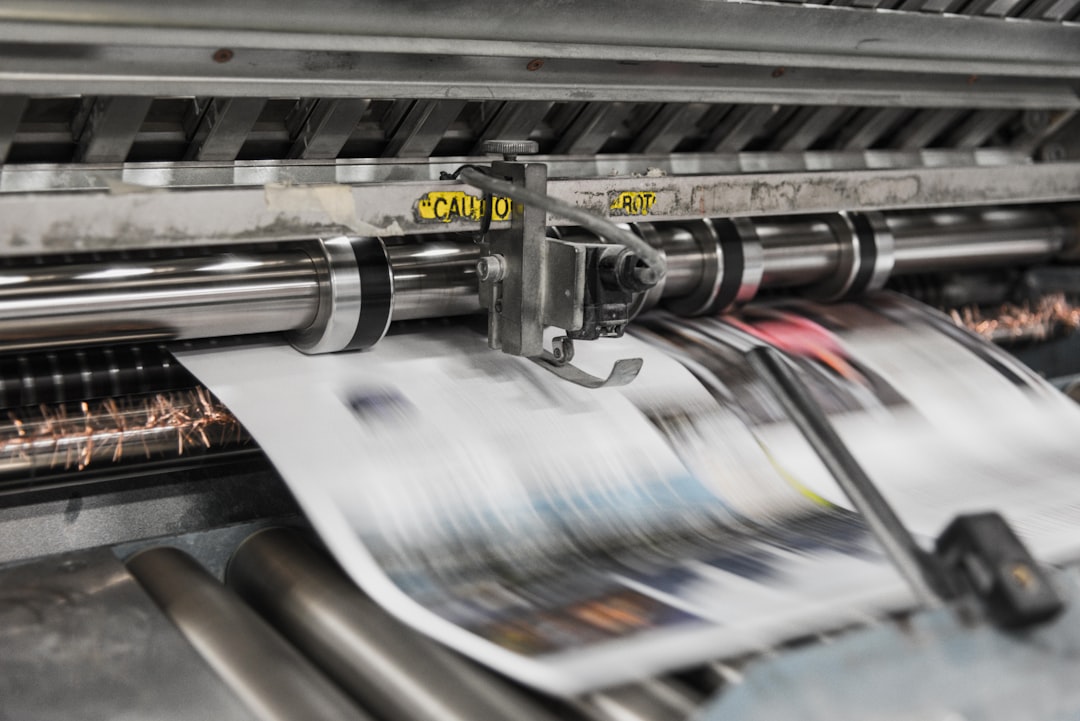
If you publish art prints, posters, zines, photo books, or limited-run reprints, inventory mistakes can quietly erode profit and trust. The good news is that edition control does not need to be complicated: you need a repeatable system for master files, SKU structure, version tracking, reorder triggers, and fulfillment handoff. When that system lives alongside your cloud photo storage and a dependable photo backup service, reprints become a process instead of a panic. For publishers and creators shipping high quality photo prints, the same discipline that protects your creative archive also protects your margin.
This guide walks you through a practical, step-by-step workflow: how to define editions, keep master files organized, build SKUs that scale, manage inventory across warehouses or print partners, and create a reprint process that avoids accidental overproduction. Along the way, we’ll connect the operational side to client-facing tools like a photo gallery for clients, private photo sharing links, and photo organization tools so the entire workflow from upload to fulfillment feels coherent.
1) Start with edition logic, not inventory software
Define what is actually “an edition”
Most inventory problems begin when publishers blur the difference between a product, a design, a paper choice, and an edition. An edition should represent a specific, controlled production run with a clear quantity cap, clear physical specs, and a consistent record of what was sold. If you sell a signed open edition, a numbered limited edition, and a special gallery edition, those are three different inventory entities even if the image file is identical. That distinction matters because it determines how you price, track scarcity, and communicate authenticity to buyers.
Think of the edition as the business promise, not just the print. Buyers don’t only care about the image; they care about whether a poster is 1 of 50, whether a reprint is identical to the first run, and whether future reorders will dilute collectability. This is where the discipline described in document versioning and approval workflows becomes surprisingly relevant. A clear approval trail helps you prove which file, proof, and production settings defined a particular edition.
Create an edition policy before you sell anything
Write down rules for how editions are created, numbered, retired, reissued, and reprinted. Your policy should answer questions like: Can an open edition ever become limited? If a paper stock is discontinued, does the edition close or move to a “v2”? What happens when a customer requests a backorder after the run sells out? These are not edge cases; they are the operational decisions that protect your brand when demand spikes. A smart policy also reduces internal debate, because everyone on the team follows the same playbook.
Publishers often benefit from borrowing from side-by-side comparison tables: build an edition matrix that compares run size, substrate, finish, size, signature status, and fulfillment method. When every SKU can be compared apples-to-apples, you reduce confusion across sales, production, and support. That also makes reprints easier to approve because the differences between runs are explicit rather than implied.
Use scarcity intentionally, not accidentally
Limited editions create urgency only when the inventory record is trustworthy. If your audience discovers that “limited” means “we’ll print more later whenever orders slow down,” the value proposition collapses. On the other hand, if you genuinely maintain caps and document the closure of each edition, you can use scarcity as a healthy commercial lever. The key is to treat scarcity like an operational commitment, not a marketing phrase.
Pro Tip: If an edition is intended to be collectible, the moment it sells out should trigger a formal status change in your system: active, low stock, archived, or retired. That single habit prevents accidental overselling and makes future reprints easier to defend publicly.
2) Build a master-file system in the cloud
Separate source files, production files, and proof files
Creators often store everything in one folder and hope memory will save the day later. That approach fails the first time a reprint comes in six months after launch, or when a client asks for a different crop. Instead, separate your source assets into at least three categories: master/source files, production-ready files, and proof files. The source file is your highest-quality original; the production file is the exact version delivered to the printer; the proof file documents what was approved.
A reliable cloud photo storage workflow gives you redundancy and permission control, which is especially important for a photo storage for photographers setup where both creative and commercial assets live side by side. If you are already using a photo backup service, make sure it preserves metadata, version history, and timestamps. Those details become evidence when you need to prove which file was sent to production.
Standardize folder naming and file naming
Pick a naming pattern and never improvise. A practical example: Project / Edition / Size / Paper / Version / Status. For example, CoastlineSeries_Ed02_18x24_Matte_V03_Approved. This seems obsessive until you have 300 files and need to identify the exact revision used for a sold-out run. A rigid convention also helps assistants, fulfillment partners, and contract printers understand the file without a long email thread.
Pair naming with folder structure. Use top-level folders for active projects, archived projects, discontinued editions, and printer deliveries. Within active projects, separate marketing renders from production masters. That structure is the foundation of strong photo organization tools because search works best when the metadata and the hierarchy agree.
Keep proof images and approvals tied to the master
For reprints, the proof matters almost as much as the original artwork. Save a flattened proof image, a PDF of the proof set, notes on paper choice, and any sign-off comments from the publisher or client. If the edition has multiple variants, attach proof records to each variant instead of relying on memory. This becomes critical in client work, where you may need a photo gallery for clients to approve color, cropping, or paper before you place the order.
In practice, the best systems treat the cloud archive as the source of truth and the print workflow as a controlled export from that archive. That way, your master files are never edited in place, and reprints always originate from the same approved version. This is the same discipline that underpins resilient creative operations in version-controlled approval workflows.
3) Design SKUs that carry real operational meaning
Use SKUs to describe production reality
A SKU should help a warehouse or print partner understand what to make and ship without needing tribal knowledge. A good SKU includes the variables that affect cost, production time, and fulfillment: edition number, size, substrate, finish, framing status, and whether it is signed or unsigned. This is where many creators go wrong: they create short, elegant SKUs that look nice in a storefront but fail in operations. The best SKU is one your team can decode in seconds.
For example, PS-ED02-18X24-MT-SIGNED might mean Poster Series, Edition 2, 18x24, matte, signed. If you add a white border or museum-grade paper, encode that too. You want a SKU that can map directly to a production spec sheet. That also helps if you sell across channels, because your product listings can stay consumer-friendly while the backend remains operationally precise.
Separate commercial variants from collector variants
Sometimes the same image exists in multiple commercial forms: a small open edition for everyday buyers, a signed limited edition for collectors, and a canvas version for interior designers. These should be separate SKUs, separate inventory pools, and separate reorder rules. Never let a popular open edition quietly consume the stock or attention reserved for the limited run. If you do, reporting becomes unreliable and scarcity messaging breaks down.
Many publishers also use a “parent SKU” and “child SKU” model. The parent represents the image or title, while child SKUs represent each production variant. This is the cleanest way to handle reprints because you can keep one creative identity while controlling multiple production paths. It also makes it easier to integrate with a cloud photo storage archive, since the parent record can point to the master asset and the child record can point to the exact print-ready export.
Build SKU rules that support future automation
If you plan to integrate with print-on-demand or a fulfillment house, your SKU language should be machine-friendly. Avoid ambiguous characters, freeform descriptors, or hidden exceptions that only one employee understands. The more consistent your SKU schema, the easier it becomes to automate reorder alerts, stock thresholds, and partner routing. This is especially valuable for publishers handling multiple photo product fulfillment channels at once.
A practical test: could a new operations hire infer the product from the SKU without asking anyone? If the answer is no, your structure is too loose. Standardize now, before growth turns each new release into a manual exception.
4) Track inventory as a living system, not a spreadsheet snapshot
Set inventory states for every edition
Inventory management is much easier when every unit has a state. Typical states include draft, proofing, active, low stock, reorder pending, allocated, shipped, sold out, and retired. Each state should have a business rule attached to it. For example, low stock may mean fewer than 10 units remain, and reorder pending may block any new campaign from using that SKU until additional stock arrives. These state definitions make inventory visible to sales, support, and production at the same time.
A live system is especially important if you are coordinating with multiple vendors or geography-specific fulfillment partners. One partner may be printing on demand while another handles boxed inventory. If your state model is weak, the same SKU can be sold through two different channels without anyone realizing the mismatch until support tickets arrive. Good state control is the operational backbone of trustworthy photo product fulfillment.
Reconcile physical counts with digital records regularly
Even the best software fails if it is not reconciled to real stock. Build a weekly or monthly count cadence for fast-moving editions and a quarterly count cadence for slower sellers. Reconciliation should compare digital on-hand inventory, allocated inventory, damaged units, and units in transit. When a mismatch appears, do not just edit the number; investigate why it changed. Often the culprit is a missed shipment receipt, a returns issue, or a print partner producing a few extra units after an unclear reorder request.
Use audit notes the way you would use metadata in a photo organization tool: each adjustment should leave a trace. The purpose is not bureaucracy; it is confidence. If you cannot explain the movement of stock, you cannot reliably forecast margins or availability.
Watch for hidden inventory drains
Inventory leakage often hides in samples, replacements, damaged goods, promotions, and “free” replacements for color issues. Those items need their own inventory buckets so they do not silently erode sellable stock. For example, a print-on-demand partner may replace one damaged poster without telling your storefront system that a unit was consumed. Over time, these small leaks distort your true sell-through rate.
The best teams treat discrepancy analysis like a routine business review rather than a blame session. They look for patterns: are certain sizes damaged more often? Do a specific paper stock or shipping box drive returns? Those findings can improve both product quality and customer service. If your print workflow depends on client approvals, a structured photo gallery for clients can also reduce expensive remakes by catching issues earlier.
5) Set reorder triggers and make replenishment boring
Use threshold-based reorder rules
The fastest way to stabilize reprints is to define reorder thresholds for each SKU. A threshold is the point at which you initiate a new print run before stock-out happens. The threshold should reflect production lead time, sales velocity, seasonality, and buffer stock. A highly seasonal art print may need a much higher reorder point than a steady evergreen seller because demand can spike suddenly after a feature, collaboration, or gallery pickup.
Think of reorder logic as a safety system. If your reprint lead time is 14 days and you sell 3 units per day, a reorder point of 10 units is too low. You would sell out before the replacement arrives. Better systems model the reorder point as demand during lead time plus safety stock. That method is common in operations because it reduces the “we sold out by accident” problem that frustrates customers and disrupts cash flow.
Create a reprint approval checklist
Before every reorder, confirm the edition is still active, the master file is the correct version, the SKU still matches the current spec, and the fulfillment partner has the correct carton and label requirements. If any of those inputs changed, the reprint needs a fresh approval. This is where a formal checklist saves time, not adds it. Once the checklist is embedded, approving a reorder takes minutes instead of a chain of clarification emails.
One helpful model comes from procurement version control: request, review, approve, release. Apply the same flow to print reorders so that no one can send a file to production without the right sign-off. For brands working with multiple creators or estates, that approval chain is the only scalable way to keep editorial control intact.
Separate “reprint the same thing” from “refresh the product”
A reprint should usually mean the same edition, same file, same physical specs, same SKU. If you want to change the paper, crop, border, printer, or packaging, create a new version or a new SKU instead. This is important because customers often buy reprints expecting continuity. If you change the product materially without a new record, you risk returns, confusion, or accusations of bait-and-switch.
In other words, not every production change deserves a marketing relabel, but every meaningful change deserves a record. The closer your system is to that principle, the easier it is to maintain trust while scaling. It also gives you flexibility when you want to launch a new premium line of high quality photo prints without rewriting the whole catalog.
6) Integrate print-on-demand and fulfillment partners without losing control
Map your handoff points
Fulfillment breaks down when no one knows where responsibility changes hands. Document exactly when the file leaves your archive, who approves production, where the partner stores the asset, how inventory is reported back, and who owns exceptions. This is especially important if you use both in-house inventory and external vendors. Without a clear handoff map, one partner may print from an outdated file while another continues selling stock that no longer exists.
Partner integration should feel like a controlled extension of your workflow, not a separate universe. If your team uses cloud photo storage as the canonical archive, then your fulfillment partner should receive only the approved export and the correct SKU mapping. For client work, a secure private photo sharing link can deliver proofs without exposing your entire library.
Choose partners based on operational fit, not just unit cost
Low per-unit cost can be misleading if the partner causes more spoilage, slower turnarounds, or poor customer experience. Evaluate print partners on paper consistency, color accuracy, packaging quality, cut tolerances, inventory reporting, and exception handling. A cheaper provider that produces inconsistent color will cost you more in replacements and brand damage than a slightly pricier partner with reliable output.
Use a vendor scorecard and include service-level metrics like turnaround time, damage rate, response time, and reporting accuracy. That scorecard turns partner selection into a repeatable discipline rather than a gut decision. It also mirrors the approach used in modular toolchains, where the goal is to connect best-in-class components without sacrificing control.
Design for both POD and stocked inventory
Some SKUs belong in print-on-demand because demand is unpredictable or low volume; others are better as stocked inventory because they sell consistently. A hybrid model is often ideal for publishers: use POD for long-tail titles, and maintain stock for proven sellers or collector editions where paper and finishing consistency matter. The trick is to label each SKU clearly so operations knows whether to trigger a press run or route an order to a fulfillment partner.
Creators who rely on photo storage for photographers and client deliveries can extend the same logic to premium print offers. The archive stores the file; the partner fulfills the print; your storefront owns the customer relationship. That separation keeps the brand experience consistent while preserving flexibility behind the scenes.
7) Build reporting that tells you what to print next
Track sell-through, not just sales
Sales volume alone does not tell you whether an edition is healthy. You also need sell-through rate, time-to-sell-out, reorder frequency, returns, damage, and contribution margin. A fast seller with poor margins may not deserve replenishment, while a slower seller with high margin and a loyal collector base may be worth a reprint. Good reporting helps you distinguish momentum from profitability.
Think in cohorts. Which editions sell through in 30 days? Which sizes consistently underperform? Which paper choice gets the fewest complaints? Those answers shape your next reorder. A data-driven publisher can make smarter decisions about photo product fulfillment and avoid printing inventory that will sit for months.
Use lifecycle reports to guide editions
Every edition should have a lifecycle report that covers launch, peak demand, low stock, reorder, sell-out, and archive. This report helps your team see whether a product is truly evergreen or simply a short-term spike. It also helps with forecasting: if a reprint historically sells 40% slower than the first run, you should reduce the next production quantity or adjust the launch plan.
Lifecycle reporting is particularly valuable for publishers with multiple creative categories. A travel poster line may have different seasonality than portrait prints, and a special campaign may perform differently depending on whether the audience sees it in a photo gallery for clients or a public storefront. The more context you collect, the less likely you are to misread the numbers.
Tie reporting to creative decisions
Inventory data should influence more than replenishment. It should inform image selection, format choices, pricing, and packaging. If framed versions outperform unframed posters, that may justify a more premium offering. If one crop consistently underperforms, it may be a composition issue rather than a sales issue. In a mature operation, the data loop closes the gap between creative intent and market response.
Pro Tip: Treat every sold-out edition as a learning event. Archive the numbers, the file version, the paper stock, the shipping configuration, and the marketing channel. That record becomes your playbook for the next launch.
8) Protect privacy, rights, and client trust
Control access with roles and private links
Edition workflows often involve artists, editors, producers, printers, clients, and assistants. Not every person needs access to every file. Use role-based permissions to limit who can edit, download, approve, or share assets. For proofing and customer review, private links are usually better than email attachments because they let you control expiration, permissions, and revocation. This matters when a gallery or publisher needs to preserve confidentiality before launch.
Private sharing should never feel like an afterthought. If you are delivering a client-facing proof set, use a secure private photo sharing link rather than sending the master file around by email. That protects both the asset and the relationship. It also complements a well-structured photo gallery for clients where approvals can happen in one place.
Keep licensing and usage rights attached to the record
Print inventory is not only about physical units; it is also about legal rights. Maintain licensing notes alongside each edition record: who owns the artwork, whether the image can be reprinted, whether there are territory restrictions, and whether the license expires. If a file is reused for a new product line or a reprint after a rights change, you need those notes to prevent disputes.
For publishers working with creators and estates, this matters as much as stock count. A good rights record protects the business from accidental misuse and helps sales teams know what can be offered. It also reinforces trust in the cloud photo storage system by ensuring the archive is not just a dump of files, but a managed asset library.
Design customer communication for clarity
When an edition sells out, tell buyers what that means. If a reprint is planned, explain whether it will be identical or a new version. If an item is archived, describe whether it is permanently retired. Clear communication reduces support volume and protects the prestige of limited runs. Customers usually accept scarcity when it is honest and predictable.
This is also where your storefront presentation should reflect your backend rigor. Use exact edition language in listings, consistent tags in your product listings, and a clean archival policy. The result is a more trustworthy brand and a calmer operations team.
9) A practical operating model you can adopt this month
Week 1: Audit and standardize
Start by auditing every active edition. Identify the master file, the approved production file, the current SKU, the inventory count, the fulfillment path, and the rights status. Move each asset into a consistent cloud folder structure, then rename files using one pattern. During this stage, your photo organization tools should become the single source of truth for file discovery.
Once the audit is complete, create a simple edition register. Even a spreadsheet works if it is disciplined. The goal is to establish a reliable baseline, not to build a perfect enterprise system overnight.
Week 2: Assign SKUs and thresholds
Assign or verify SKUs for every product variant and set reorder thresholds based on lead time and daily sales. For new sellers, start conservatively and adjust after the first selling cycle. Link each SKU to the correct master file and proof record so that reprints can be approved quickly. If you have a team, define who can move a SKU from active to low stock to reorder pending.
This is also the time to document your partner handoff rules. Decide which SKUs are fulfilled in-house, which go to POD, and which are reserved for special production runs. A clean split reduces confusion and improves fulfillment accuracy.
Week 3 and beyond: Automate alerts and reviews
Set up alerts for low stock, stale approvals, and partner exceptions. Review your fastest-moving editions weekly and slower titles monthly. After each reprint, log the actual run size, production cost, spoilage, and time to ship. Over time, those records will show you which art formats deserve more investment and which should be retired. If your catalog includes client work, preserve the proof chain in a secure private photo sharing link so the approval history stays easy to retrieve.
By the end of the first quarter, you should be able to answer four questions instantly: What do we have? What is selling? What needs reprinting? And who approved the current version?
| Area | Weak Process | Strong Process | Why It Matters |
|---|---|---|---|
| Edition definition | Loose, marketing-driven labels | Clear policy with caps and variants | Protects scarcity and prevents confusion |
| Master files | Scattered folders and overwritten files | Cloud archive with source, production, and proof versions | Ensures reprints use the right asset |
| SKU design | Short, ambiguous codes | Meaningful codes with size, stock, and finish | Improves fulfillment accuracy |
| Inventory tracking | Static spreadsheet snapshot | Live states with reconciliation and audit notes | Reduces stock-outs and shrinkage |
| Reorder process | Ad hoc emails and guesswork | Threshold-based triggers and approval checklist | Makes replenishment predictable |
| Partner handoff | Files sent with no context | Documented handoff points and service metrics | Protects quality and turnaround |
| Rights management | Notes buried in inboxes | Rights record attached to every edition | Prevents licensing mistakes |
10) Putting it all together: the publisher’s reprint loop
The loop in one sentence
Define the edition, store and version the master file in the cloud, assign a meaningful SKU, set an inventory threshold, trigger a reorder, approve the proof, fulfill through the right partner, and archive the run. That is the loop. If you can repeat it without improvisation, you can scale the catalog without losing control. The loop is what turns creative output into a dependable business asset.
Why this system works for both creators and publishers
Creators want speed and simplicity. Publishers need consistency and accountability. This framework supports both because it reduces friction while protecting the asset lifecycle. It works whether you are shipping 25 gallery prints or thousands of reprints because the core logic is the same: version the file, define the SKU, track the inventory, and document the handoff. That makes your operation more resilient and your customer experience more professional.
Final recommendation
If you are starting from scratch, do not try to automate everything at once. First, create the edition register and cloud file structure. Second, standardize SKUs and approval checkpoints. Third, connect inventory reporting to reorder thresholds and partner workflows. Once those basics are stable, you can layer in more advanced automation, analytics, and client-facing delivery features. If your broader business also includes archival photography, family albums, or client galleries, a unified system built around cloud photo storage and private photo sharing links will save time across every workflow.
In other words: the best inventory system is not the one with the most features. It is the one your team can follow consistently when orders spike, files change, and deadlines get tight.
FAQ
How do I decide whether a reprint should be the same edition or a new one?
If the image, size, paper, finish, and production intent are unchanged, it can usually remain the same edition. If any meaningful physical or rights-related variable changes, create a new version or SKU. That keeps your records honest and your customers informed.
What is the simplest way to manage master files for reprints?
Use a cloud archive with separate folders for source, production, and proof files. Never overwrite the source file. Always keep the exported print file and the approved proof tied to the edition record so you can reproduce the run accurately later.
How detailed should my SKU be?
Detailed enough that operations can infer the product without asking questions, but not so long that the code becomes unreadable. Include edition number, size, substrate, finish, and signature status at minimum. If fulfillment is complex, encode that too.
How do I prevent overselling limited editions?
Set a low-stock threshold, connect it to your storefront, and use inventory states such as active, low stock, reorder pending, and retired. Reconcile physical stock regularly and require approval before any reprint is released to production.
Can print-on-demand work for limited editions?
Yes, but only if the partner can maintain strict controls on quantity, file version, and reporting. For collectible editions, many publishers prefer stocked inventory because it gives more control over scarcity and finish consistency. POD is often better for open editions or long-tail products.
What should I store in the cloud besides the image file?
Store the master file, the production export, the proof file, approval notes, rights/licensing information, SKU mappings, and inventory history. The goal is to make the cloud archive a complete operational record, not just a backup folder.
Related Reading
- The Evolution of Martech Stacks: From Monoliths to Modular Toolchains - A helpful lens on building flexible systems that scale without becoming brittle.
- What Procurement Teams Can Teach Us About Document Versioning and Approval Workflows - Great for tightening your proofing and sign-off process.
- Side-by-Side Specs: How to Build an Apples-to-Apples Car Comparison Table - A useful model for comparing editions and print variants.
- Pricing Analysis: Balancing Costs and Security Measures in Cloud Services - Useful when choosing the right archive and backup stack.
- Age Verification vs. Privacy: Designing Compliant — and Resilient — Dating Apps - Surprisingly relevant for permissioning, privacy, and controlled access.