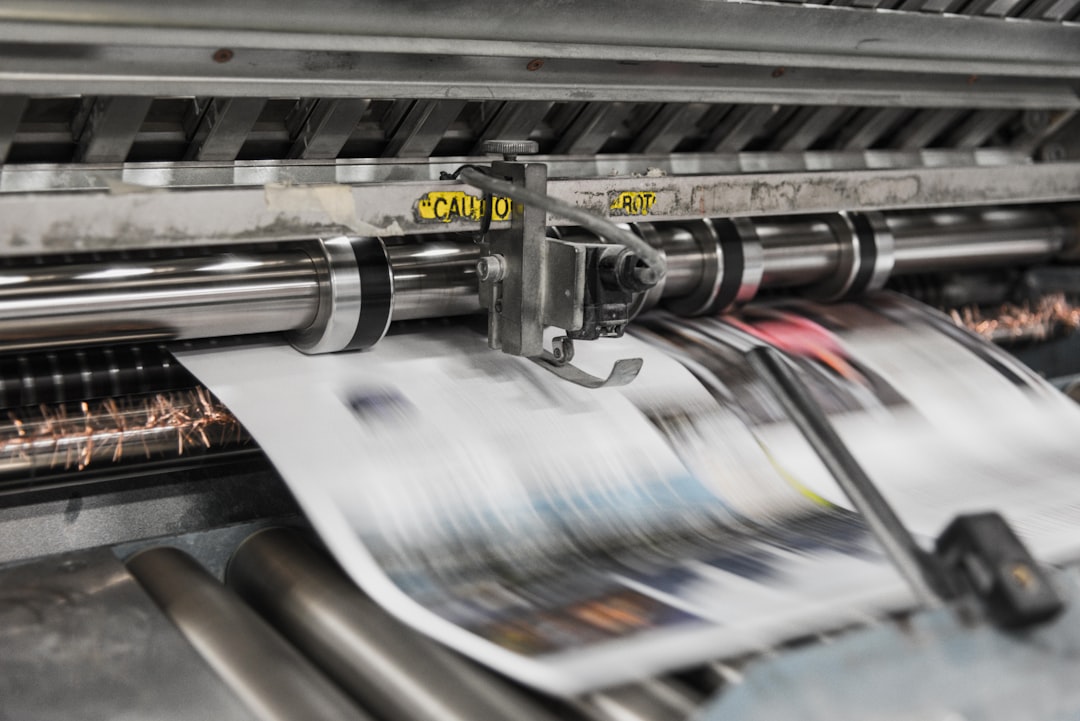
Print resolution gets explained so often that many people come away more confused than when they started. This guide gives you a practical way to decide what resolution you really need for photo prints, posters, and large-format wall art. Instead of treating 300 DPI as a rule for every situation, it shows how print size, viewing distance, cropping, and file quality work together. Keep it bookmarked as a reusable checklist before you upload a file for printing.
Overview
If you only remember one thing, remember this: DPI is not a magic quality setting. It is a relationship between your image pixels and the physical size you want to print.
An image that is 3000 × 2400 pixels can be printed at different sizes. At a smaller size, it can look very sharp. At a larger size, the same file may still look good, but not at the same close-up crispness. That is why asking “Is this 300 DPI?” is less useful than asking “How many pixels do I have for the print size I want?”
For most print planning, these guidelines are useful:
- Around 300 DPI: a strong target for small to medium prints viewed up close, such as portfolio prints, tabletop frames, or detailed fine art prints.
- Around 240 DPI: often a very workable range for many high-quality prints, especially if the original file is clean and the subject is not full of tiny critical detail.
- Around 150 to 200 DPI: often acceptable for larger wall prints and posters that will be viewed from a normal room distance rather than from a few inches away.
- Below that: can still work for very large displays, but only if the viewing distance increases and the source file is otherwise strong.
This is why large photo prints and custom poster prints do not always need 300 DPI at final size. A poster on a wall is not judged the same way as an 8×10 print held in your hands.
It also helps to separate a few terms that get mixed together:
- Pixels: the actual dimensions of your digital file, such as 4000 × 3000.
- DPI or PPI: the pixel density when that file is printed at a given physical size.
- Resolution for printing: the practical match between file dimensions and intended print dimensions.
For file prep, the most useful formula is simple:
Pixel dimensions ÷ print size in inches = effective DPI
Examples:
- 3000 pixels wide ÷ 10 inches = 300 DPI
- 3000 pixels wide ÷ 15 inches = 200 DPI
- 6000 pixels wide ÷ 20 inches = 300 DPI
That is the core of any print resolution guide. Once you know your file size and intended print size, you can make a realistic decision instead of guessing.
If you are still deciding on dimensions, it helps to review a dedicated sizing reference such as Photo Print Sizes Guide: Standard Dimensions, Aspect Ratios, and Frame Matches or a room-based planning resource like Poster Size Guide: How Big Should Your Poster Be for Every Room?.
Checklist by scenario
Use this section like a pre-order checklist. Start with the kind of print you want, then check whether your file supports that goal.
1) Small photo prints and framed desk prints
Typical use: 4×6, 5×7, 8×10, small gifts, portfolio leave-behinds, proof prints.
Best target: Aim close to 300 DPI if you can.
Why: These prints are usually viewed at close range, so softness shows more easily.
Checklist:
- Check your pixel dimensions before anything else.
- At 8×10, a file around 2400 × 3000 pixels reaches 300 DPI.
- At 5×7, you need fewer pixels to achieve the same print density.
- Look closely for motion blur, missed focus, or heavy noise reduction. High DPI does not fix a soft original.
- Confirm the crop ratio. Many files from phones and cameras do not match standard frame sizes exactly.
If the print will be framed behind glass and viewed up close, detail matters. This is where 300 DPI for printing makes the most sense as a practical target.
2) Standard wall prints for home or office
Typical use: 11×14, 12×18, 16×20, 16×24.
Best target: 240 to 300 DPI is ideal; lower can still be fine depending on the image and viewing distance.
Why: These are often viewed from a step or two back, so you have more flexibility.
Checklist:
- Estimate how close people will stand to the print.
- For portraits, smooth tones and strong focus usually matter more than chasing a perfect number.
- For landscapes, architecture, or highly detailed artwork, higher effective DPI is worth preserving if possible.
- Do not upscale automatically unless you need to. First see whether the native file is already sufficient for the intended display distance.
- Test the crop before ordering, especially for 11×14 and 16×20, which often require trimming from common camera ratios.
3) Posters and large photo prints
Typical use: 18×24, 24×36, promotional posters, dorm decor, creator merchandise, statement wall art.
Best target: Around 150 to 200 DPI is often enough; more is welcome, but not always necessary.
Why: Posters are usually seen from farther away. At normal viewing distance, a well-prepared file at moderate effective resolution can still look clean and convincing.
Checklist:
- Measure the wall and estimate viewing distance honestly.
- Ask whether the poster is meant for close inspection or room impact.
- If your file is borderline, a matte or less reflective finish can sometimes feel more forgiving than a very glossy surface.
- Keep text and graphics separate from photos when possible. Text needs sharper edges than photographic content.
- For creator merchandise or branded prints, proof one size before committing to a full run.
If you are comparing finishes for poster printing online, see Matte vs Glossy vs Luster Prints: Which Finish Is Best for Your Photo? and Print finishes and sizes demystified: what creators should choose for posters and art prints.
4) Fine art prints and art print reproduction
Typical use: giclee printing, artist editions, gallery presentations, archival photo prints, museum-style reproductions.
Best target: Stay as high as you reasonably can, often close to 300 DPI at final size if detail retention is important.
Why: Fine art prints are often judged more critically, and surface detail, brush texture, line quality, and tonal subtlety matter.
Checklist:
- Use the highest quality master file available.
- Avoid repeated export cycles that compress the file again and again.
- Check for sharpening halos, blocked shadows, and clipped highlights.
- Match the paper to the image character. Resolution is only one part of perceived quality.
- If printing artwork, inspect edges, texture transitions, and neutral areas for color contamination.
Paper choice strongly affects how detail is perceived. For help choosing surfaces, see Best Paper for Art Prints: Cotton Rag, Baryta, Pearl, and Matte Compared and Canvas vs Fine Art Paper Prints: Pros, Cons, Cost, and Look.
5) Phone photos and social content turned into prints
Typical use: influencer wall art, travel posters, lifestyle prints, creator storefront products.
Best target: Depends heavily on how much editing, cropping, and compression the image has already gone through.
Why: Modern phones can capture enough pixels for many print sizes, but screenshots, platform downloads, and heavily filtered exports often do not.
Checklist:
- Always start from the original camera file if possible.
- Avoid downloading your own image back from social platforms for printing.
- Check whether portrait mode blur, AI smoothing, or aggressive low-light processing looks natural at print size.
- Be careful with panoramic crops; they can reduce pixel count quickly.
- Order a smaller proof if you are unsure how the file will translate to paper.
If your workflow includes turning creator content into products, Monetize your mobile images: turning influencer content into posters and prints is a useful next read.
What to double-check
This is the part people skip when they are in a hurry. It is also where many print disappointments begin. Before ordering photo prints online or sending a file for giclee printing, check these five things.
1) Pixel dimensions, not just file size
A large megabyte count does not guarantee enough resolution. An image can be a big file because of layers or minimal compression, yet still have limited pixel dimensions. What matters for print size is width and height in pixels.
2) Crop ratio
A file can have enough pixels and still print badly if the chosen print size forces an awkward crop. A 4:5 image, a 3:2 image, and a square image all behave differently. Always preview the trim before ordering. This matters as much as resolution in many jobs.
3) Sharpness at 100%
Zooming in helps reveal whether the image is truly detailed or only appears crisp on a small screen. If eyes, textures, edges, or key focal points look weak at 100%, the print will not gain detail by being output at 300 DPI.
4) Editing artifacts
Watch for halos from over-sharpening, muddy gradients, posterization in skies, and crushed blacks. These issues become more visible on paper, especially in larger sizes or on smoother fine art surfaces.
5) Output intent
Know whether you are printing a casual poster, a professional portfolio piece, or a limited-edition art print. The same file may be acceptable for one use and not for another. Resolution decisions make more sense when the final purpose is clear.
It is also wise to keep your files organized so you do not accidentally upload the wrong version. A workflow guide like Organize like a pro: folder structures and tagging systems for reprints and posters can save time and reorders.
Common mistakes
Most print resolution problems come from a few repeatable mistakes. If you avoid these, you will prevent the majority of disappointing results.
Believing 300 DPI guarantees quality
It does not. A blurry, noisy, or heavily compressed image printed at 300 DPI is still a blurry, noisy, or heavily compressed print.
Assuming every large print needs 300 DPI
This leads people to reject perfectly usable files or to upscale more than necessary. Posters and large wall art are judged at a distance. Practical image resolution for posters is often lower than close-view fine art prints.
Using the wrong source file
Common examples include screenshots, social media downloads, messaging app versions, and files exported multiple times. Start from the original or highest-quality edited master whenever possible.
Ignoring viewing distance
The larger the print, the less likely it is to be examined from inches away. A print resolution guide that ignores this becomes too rigid to be useful.
Forgetting that paper and finish change perception
Perceived sharpness is not only about pixel count. Surface texture, gloss level, contrast, and tonal rendering all affect how a print feels. A bright baryta paper and a soft matte paper can make the same file feel very different.
Cropping too aggressively
Even high-resolution originals can become marginal once heavily cropped. If you regularly crop tightly, calculate effective DPI using the cropped pixel dimensions, not the camera's full original size.
Trusting on-screen size too much
Images can look excellent on phones and laptops because screens are small, bright, and backlit. Prints are reflective objects viewed under ambient light. Always judge the file with print in mind, not just screen appeal.
When to revisit
Resolution decisions should be revisited whenever the inputs change. That is what makes this topic worth returning to instead of memorizing a single rule.
Come back to this checklist when:
- You change print size. A file that works beautifully at 8×10 may be borderline at 20×30.
- You crop more tightly. Cropping changes the available pixels immediately.
- You switch products. A casual poster, a framed photo print, and a gallery-grade art reproduction do not ask the same things of the file.
- You change paper or finish. Different surfaces reveal or soften detail in different ways.
- Your workflow changes. New camera settings, export presets, editing apps, or AI tools can affect true image quality.
- You prepare for seasonal launches. Before a holiday drop, exhibition, merch release, or client order batch, review your sizing and export assumptions.
Here is a final action checklist you can use each time:
- Choose the exact print size first.
- Check the cropped pixel dimensions of the final image.
- Divide pixels by inches to estimate effective DPI.
- Match that number to real viewing distance, not an abstract ideal.
- Inspect focus, noise, artifacts, and tonal detail at 100%.
- Confirm aspect ratio and trim area.
- Choose paper and finish based on the image character and display goal.
- If the file is borderline, order a proof before committing to a larger run.
The practical answer to “what DPI for photo prints?” is usually not one number. It is the right number for the size, subject, surface, and viewing distance you actually have. Once you start thinking in pixels, inches, and real-world use, file prep becomes much more predictable—and your print results become easier to trust.