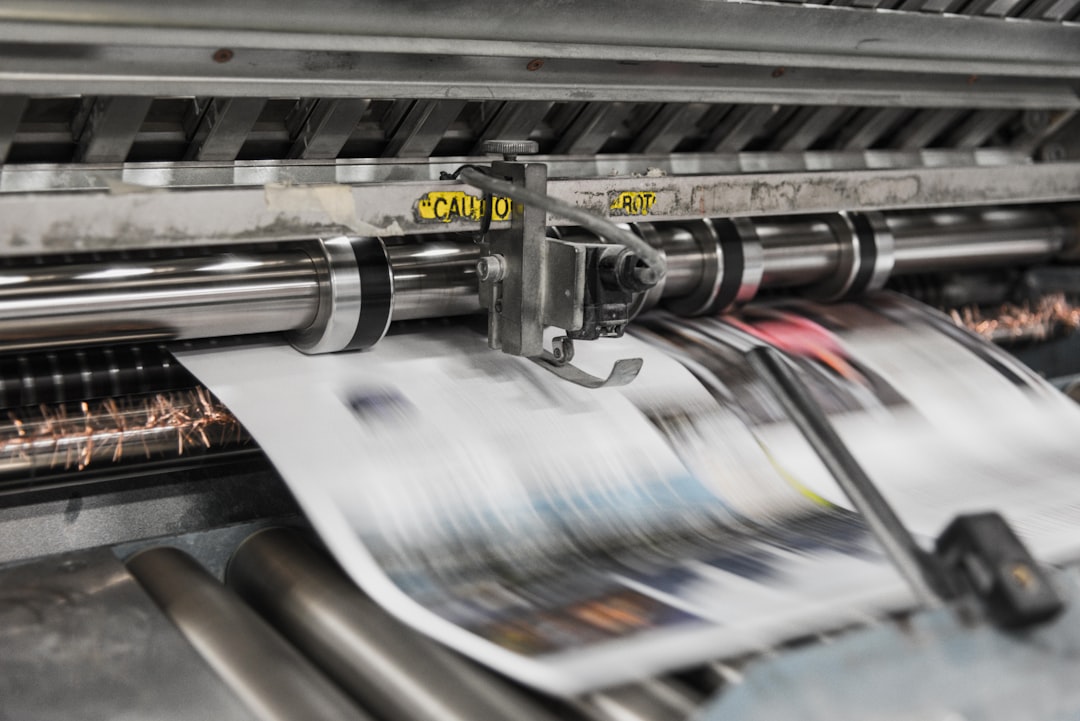
Legal Essentials for Reprints and Art Prints: Why Rights Management Starts Before the First Upload
When you sell or distribute reprints and art prints, the biggest legal mistakes usually happen long before checkout. A beautiful image is not automatically print-safe just because you own the camera or edited the file. Copyright, licenses, model releases, and property releases all shape whether an image can be used commercially, displayed publicly, or fulfilled as a print product. If you’re building a reliable workflow, think of this as the legal version of a secure photo backup: if you don’t preserve the rights paperwork, you may lose the only proof that the image can be used later.
For creators, publishers, and photographers, the practical problem is not just compliance; it is speed and confidence. The ideal system combines identity verification, workflow selection, and organized records so you can respond quickly when a client asks, “Can this be printed?” or “Do we have a release on file?” Good cloud photo storage should support this by keeping the image, the release, the license, and the delivery history together in one searchable place. That makes your archive more than a warehouse; it becomes a legal operations system.
Copyright Basics: What You Own, What You Don’t, and Why It Matters for Print Sales
The photo is protected, but the subjects and locations may not be cleared
In most jurisdictions, the photographer owns copyright in the image the moment it is created, unless a work-for-hire agreement or contract says otherwise. That means you generally control reproduction, distribution, display, and derivative uses. But ownership of the photo is only one piece of the puzzle. If the image includes recognizable people, private property, artwork, logos, or trademarks, those elements may require additional permission depending on how the image will be used.
This is where many print sellers make an expensive assumption: “I shot it, so I can sell it.” Not always. Editorial publication may be allowed where commercial product use is not, and a social post may be acceptable where a wall print for resale is not. For creators who rely on fast, verifiable content workflows, the key is to document the intended use at the moment of upload. If you are going to offer online photo printing, you should tag whether the image is editorial-only, rights-cleared for merchandising, or available for licensed art-print distribution.
Public domain, Creative Commons, and licensed assets are not the same thing
Creators often mix up “free to use” with “free for any use.” Public domain material may be usable without permission, but you still need to verify the source and date. Creative Commons licenses can be powerful, yet they may require attribution, prohibit commercial use, or forbid derivatives. Paid licenses can be even more nuanced, especially if the license limits print quantity, geographic region, or product category. If you are offering a photo gallery for clients, the simplest rule is this: define the usage right in plain language, then attach the source license next to the asset.
A practical way to stay organized is to separate “owned,” “licensed,” and “restricted” images in your library. That sounds obvious, but it becomes critical when your archive reaches thousands of files across devices and teams. Smart photo organization tools let you filter by rights status, expiration date, and usage type, which is exactly what a print business needs to avoid accidental misuse. In other words, a clean rights taxonomy is not just legal hygiene; it is a revenue protection system.
Work-for-hire and contributor agreements should be explicit
If you commission a photographer, illustrator, or retoucher, do not assume the client automatically owns all downstream print rights. A work-for-hire clause may apply only in certain countries and only to certain categories of work. In many cases, the safest route is a written assignment or license that spells out who can reproduce the image, for what products, in what territories, and for how long. This matters whether you are running a small creator storefront or a large publisher archive.
If your team includes editors or contractors, use a standardized agreement library and store the final signed version beside the asset. That’s similar to how teams manage production continuity in other industries: they rely on automation patterns rather than ad hoc manual approval. For photo licensing, the equivalent is a repeatable rights workflow, not a memory-based system. The more consistent your recordkeeping, the less likely you are to discover a rights gap after prints are already sold.
Model Releases: When People in the Frame Require Permission
Recognizable people and commercial use
A model release is permission from a recognizable person to use their likeness for specified purposes. If a person can identify themselves in the image, and the image will be used commercially, a release is often essential. That includes uses like advertising, print merchandise, book covers, packaging, or promotional posters. Editorial use may be treated differently, but the line is not always simple, especially when the same image might be used both in a story and in a product listing.
For creators who build audiences around lifestyle, travel, family, or event photography, model releases should be captured as close to the shoot as possible. If you wait until distribution, people may be harder to reach or less willing to sign. This is why a well-designed cloud photo storage workflow should let you attach release status to each person-tagged image. A strong archive does not just store pixels; it stores the legal context of the pixels.
Minors, groups, and event photography
Children require extra caution. Releases should generally be signed by a parent or legal guardian, and you should avoid ambiguous verbal consent or old paperwork that does not clearly cover commercial print use. Group shots and event coverage also need careful triage: a crowd image may be safe for editorial use but problematic for a poster campaign. If a subject is the clear focus of the image, assume a release is needed before commercial distribution.
Event shooters can reduce friction by building a release workflow into the event itself. QR-code forms, digital signatures, and on-site release stations make it much easier to collect permission before people leave. This mirrors the logic behind micro-feature workflows: small, fast interactions are more likely to happen than large, delayed ones. When releases are captured in real time, you protect both the client and the future print catalog.
Editorial, documentary, and fine-art exceptions
Not every portrait requires the same release standard. Editorial and documentary work can often be published without a model release, especially when the goal is news, commentary, or historical record. Fine-art prints may also be treated differently depending on the jurisdiction and how they are marketed. But as soon as an image is used to sell a product, promote a service, or imply endorsement, the commercial standard becomes much stricter.
That distinction matters because many publishers repurpose the same asset across channels. A newsroom image can be licensed as a wall print later, and a gallery portrait can be used in a promotional landing page. Before that happens, review the original permissions and intended use case. For teams scaling photo products, this is a lot like checking data access in sensitive systems; the lesson from privacy-sensitive customer intake is simple: use data only in ways people reasonably expected when they consented.
Property Releases: Buildings, Interiors, Artworks, Logos, and Other Rights Traps
Private property is not automatically fair game for commercial prints
Property releases are commonly associated with real estate, landmarks, interiors, and privately owned objects. If the property is private and the image is used commercially, permission may be needed from the owner or rights holder. A striking building facade might be perfect for a poster, but if the structure is protected by trademark, design rights, or contractual restrictions, the print can create exposure. The same issue can arise with interiors, museum spaces, and branded environments.
This is one reason creators should maintain clear notes about location, ownership, and usage context. A well-tagged image library functions like resilient operations planning in other sectors. If you’ve ever read about stress-testing systems for scenario shocks, the principle is the same: identify brittle points before they fail. In a print workflow, that means spotting property-rights risks before a licensed poster goes live.
Logos, trademarks, and artwork in the frame
Logos in the background can be as problematic as the main subject, depending on how the image is used. A casual street scene may be fine for editorial content, but if a commercial print prominently features a trademark or copyrighted artwork, the rights analysis changes. Artwork displayed in galleries, murals, and installations is especially sensitive because the artwork itself may be protected even when the photo is yours. Always distinguish between photographing a scene and licensing the scene for resale.
For this reason, many professional archives use dual metadata: one layer for visual description and another for rights clearance. That lets editors search for “cafe exterior,” then see at a glance whether a logo or protected artwork is present. It’s a practical example of how trustable system design can be applied outside engineering. If the legal metadata is visible at the point of selection, teams make fewer mistakes.
Why some “safe-looking” images still need review
It is tempting to assume that a landscape, a conference room, or a product shot is low-risk because it contains no obvious people. But print distribution can reveal hidden rights issues: a branded chair, a copyrighted sculpture, or a private interior design may trigger restrictions. The safest practice is to create a release checklist for every image that enters the print catalog. That checklist should ask what is visible, who owns it, and whether the intended print use is editorial, promotional, or retail.
Pro Tip: If you cannot explain in one sentence why an image is legal for print resale, it is not ready for print resale. Keep the release, license, or property permission attached to the file so the answer is visible during review, not after launch.
Licensing Options for Reprints and Art Prints: Choosing the Right Commercial Path
Rights-managed, royalty-free, and custom licenses
Licensing determines how a buyer can use your image. Rights-managed licenses are highly specific and often priced by usage variables such as duration, region, and print quantity. Royalty-free licenses are typically broader and simpler, though still governed by terms. Custom licenses give you the flexibility to define exact print and distribution rights, which is often the best approach for art prints, limited editions, and branded client work.
If your business offers print product selection or curated collections, your license terms should match the product line. A museum-quality print, a poster, and a greeting card may each need different rights language. This is where a flexible catalog system helps, because you can map an uploaded image to one or more products while preserving the legal terms attached to each use.
Exclusive versus non-exclusive rights
Exclusive rights can increase value because the buyer becomes the only party allowed to use the image in the defined way. Non-exclusive licenses are more common for stock and scalable print programs. The right choice depends on your pricing, audience, and creative strategy. A limited-edition art print may justify exclusivity, while a family-photo or editorial reprint service usually benefits from simpler, non-exclusive permissions.
If you are building a creator-facing storefront, clarify whether exclusivity applies to the image file, the use case, or the region. Many disputes happen because “exclusive” is used casually without scope. In a robust photo storage for photographers setup, those distinctions should be searchable and attached to the asset metadata. The benefit is not only legal accuracy, but also better pricing discipline.
Limited editions, print runs, and derivative works
Art prints often rely on scarcity. If you promise a limited edition of 50, your license documentation should define whether that count includes APs, proofs, damaged replacements, and future reissues. Derivative works raise another issue: can the buyer crop, color-grade, overlay text, or combine the image with another design? If not, say so clearly. The more you define now, the less you will need to resolve later with refunds, takedowns, or confusion.
Think of licensing language as a product-spec sheet for rights. A seller can understand the difference between a standard print, a canvas, and a framed edition; the legal terms should be just as clear. This aligns well with the philosophy behind asking the right technical questions before hiring: clarity upfront prevents painful surprises later. The same is true for image rights.
A Practical Evergreen Checklist for Print-Safe Distribution
Before upload: capture and categorize the rights data
The safest workflow starts at ingest. For every new image, record who created it, whether it was commissioned, whether people are recognizable, whether private property appears, and what uses are allowed. Add a rights status tag such as owned, licensed, editorial-only, model released, property released, or restricted. If your system supports it, attach expiration dates, territory limits, and product exclusions at this stage. That way, the image is already print-aware before anyone adds it to a sales gallery.
For larger libraries, automation matters. Use a naming convention that includes the shoot date, asset type, and release ID. Then sync the file to a secure archive so that the image and its documents are never separated. This is the same logic behind resilient media systems and protecting access to your digital library: if the rights proof disappears, operational confidence disappears with it.
Before listing: verify use case against the license
Before you publish an image for sale or client review, confirm that the intended use matches the permissions you have. If the image will be sold as a poster, ask whether commercial merchandising is allowed. If it will be used on a book cover, confirm the license covers editorial and promotional use. If it will be delivered to a client gallery, decide whether that client can download, print, resell, or sublicense the image.
Many teams use a simple traffic-light review system. Green means all permissions are in place, yellow means limited use or pending documentation, and red means do not publish. In a collaborative environment, this is far more reliable than depending on memory. A well-designed launch timing workflow can be adapted here: release the image only when rights approval and print fulfillment readiness are aligned.
Before fulfillment: check the print product against restrictions
One of the easiest mistakes is to approve an image for one product and then use it across a different one. An image cleared for a private proof may not be cleared for public poster sales. Similarly, a licensed editorial image may not be cleared for a canvas print sold through an online store. Review the product type, the display context, and the geographic market before fulfillment. If in doubt, pause and revalidate the rights record.
Print fulfillment systems should support a final rights checkpoint, not just a design approval. That means your migration or platform change process should include legal metadata, not just files. Otherwise, you risk moving assets into a new system and losing the context that made them safe to print in the first place.
Before archive and re-use: preserve documentation with the image
The final step is long-term preservation. Keep the signed release, licensing agreement, proof of payment, correspondence, and any rights notes directly alongside the image in cloud storage. Use searchable tags such as subject name, release type, expiration date, and allowed products. This turns your archive into a living compliance record. If you later repurpose an image for a calendar, notebook, or framed print, you can find the documentation in seconds.
Strong archives behave like a high-quality backup strategy: they are complete, redundant, and easy to restore. That is why creators increasingly want a photo backup service that protects both files and metadata. A backup without rights documents is only half a backup. For print-ready publishing, legal proof and image files should travel together.
How to Store Signed Releases and Rights Documentation in the Cloud
Use a paired file structure for images and permissions
The simplest cloud strategy is to pair each image with a companion folder or record containing the release PDFs, license PDFs, and approval notes. If your platform supports custom fields, store the rights status directly in the image record and attach the document there too. The goal is to avoid a split-brain archive where the photo lives in one place and the permission lives in another. That split is where errors and delays happen.
For teams handling large volumes, a database-style archive is best. Each file should have a unique asset ID, and every release should reference that ID. This makes it easier to search and report on what is safe to print. Think of it as the rights equivalent of a structured catalog, not a pile of attachments. Good cloud photo storage should make this easy rather than forcing you into a manual folder hunt.
Set permission rules for clients, staff, and outside vendors
Rights documentation is sensitive, especially when it includes names, signatures, and contract terms. Use private photo sharing links for review galleries, but restrict downloads for assets that are not ready for public use. Give staff access based on role: editors may need read access to releases, while fulfillment vendors may only need print-approved status. Avoid broad sharing whenever possible, because permissions drift is one of the most common causes of accidental misuse.
There is also a privacy dimension. Family portraits, newborn sessions, and branded creator content may all include personal data. A secure archive should support both permission controls and audit history, so you know who viewed or downloaded an asset. That approach mirrors best practices in other sensitive systems, where access control is as important as storage itself. If you want a robust private photo sharing links workflow, make sure it supports expiration dates, password protection, and download restrictions.
Back up releases as if they were irreplaceable originals
Signed releases are not supplemental paperwork; they are part of the asset’s legal value. Store them in redundant cloud locations, keep version history, and preserve the original signature file or audit trail. If you use e-signatures, retain the time stamp, signer identity, and authentication record. If you rely on scans, make sure the scan is legible, complete, and linked to the corresponding image set.
Creators who already depend on a secure photo backup routine are halfway there, but legal records need special treatment. They should be searchable, exportable, and easy to verify during a dispute. In practice, this means you should be able to answer three questions instantly: who signed, what did they authorize, and which files are covered?
Comparison Table: Release Types, Risk Level, and Best Use Cases
| Document Type | What It Covers | Typical Risk If Missing | Best For | Cloud Storage Tip |
|---|---|---|---|---|
| Model Release | Permission to use a person’s likeness commercially | Claims of unauthorized commercial use | Portraits, lifestyle, fashion, events | Attach to subject-tagged image records |
| Property Release | Permission to use private property or interiors | Takedowns or ownership disputes | Architecture, interiors, branded spaces | Store with location metadata and ownership notes |
| License Agreement | Scope of use, duration, territory, and product types | Breach of contract or overuse | Stock, commissioned art, licensed reprints | Index by expiration date and usage category |
| Work-for-Hire / Assignment | Ownership or transfer terms for commissioned work | Disputes over who controls print rights | Editorial teams, agencies, publishers | Keep final signed PDF linked to asset ID |
| Editorial-Only Note | Limits the image to news or commentary uses | Commercial misuse and rejected uploads | Journalism, documentary archives | Mark as restricted in gallery and fulfillment systems |
Operational Best Practices for Creators, Influencers, and Publishers
Build a rights-aware ingestion workflow
The earlier you capture rights information, the better your downstream output will be. When images enter your library, prompt for creator, date, location, subject names, license type, and release status. If the image comes from a collaborator, require the uploaded file to include the signed permissions or a verifiable link to them. That first-minute discipline saves hours later when you need to filter print-ready assets. It also helps when you are working across teams, because everyone can see the same rights context.
For publishers and larger studios, this is no different from other data-first workflows. The key is to make the legal fields mandatory, not optional. Think of it as the rights version of setting a default publishing template. The more information you require on ingestion, the more reliable your photo gallery for clients becomes.
Create a print-safe review queue
A print-safe review queue should contain only assets that have passed legal checks. Images in this queue should display a visible badge or label indicating their rights status. If an asset is pending, it should remain out of public storefronts and client-facing ordering flows. This minimizes risk and reduces the chance that a rushed team member ships a product before review is complete.
This approach also improves customer experience. Clients do not want to wait on legal back-and-forth after approving a favorite image, and publishers do not want last-minute changes before a campaign launch. If your workflow includes staggered release timing, align the legal checkpoint with the final publish window so the asset is cleared, available, and ready at the same time.
Train collaborators on the difference between personal and commercial use
Many legal mistakes come from ordinary misunderstandings. A collaborator may think posting an image on social media is the same as selling it as a poster, but the rights requirements are often different. Teach your team to ask a simple question before every use: is this editorial, promotional, or retail? That one question can prevent a lot of accidental misuse. Make sure contractors and clients receive the same guidance so expectations are consistent.
This is especially important when you deliver albums to families or influencer clients. A family may want a birthday print, while a brand client may want a campaign poster from the same shoot. The permissions should clearly reflect the intended path. In the same way that professionals use structured event planning to avoid chaos, you should use structured rights planning to avoid licensing chaos.
Common Mistakes That Make Prints Legally Unsafe
Assuming social media consent equals print consent
A person may agree to be photographed or posted online, but that does not automatically authorize a commercial print product. Consent for a tagged social post is not the same as permission for resale. To avoid confusion, collect specific language that describes how the image may be reproduced, displayed, and sold. If the same image may be used in multiple channels, make sure the release or license names them all explicitly.
Teams that rely on cloud workflows should make this distinction visible in the asset record. The rights field should say more than “approved.” It should say approved for what. That kind of specificity is the backbone of trustworthy photo organization tools, especially when assets will be repurposed months later by someone who was not on the original shoot.
Using images beyond the licensed territory or term
Licenses can expire, and some are limited by geography. A print right that works in one market may not cover global ecommerce fulfillment. If your storefront ships internationally, the legal review needs to account for where the buyer lives and where the product is produced. The same is true for time limits; a campaign image that was cleared for one quarter may not be cleared for next year’s catalog.
That is why expiration dates deserve to be first-class metadata in your archive. If your image management system cannot sort by date, create a review reminder manually. In high-volume environments, a missed expiration can lead to a costly takedown, refund, or reprint. This is the image-licensing equivalent of poor contingency planning in logistics: the problem is not the initial decision, but the failure to track what changes over time.
Neglecting documentation after the sale
Some teams treat legal paperwork as something needed only for the initial launch. In reality, print businesses often get requests months or years later. A magazine may want a reprint, a customer may ask for a larger size, or a brand may request a refreshed usage license. If the signed release or assignment is no longer easy to find, you lose speed, and sometimes credibility. The archive must support the full lifecycle of the image.
This is why long-term retention is part of best practice. Store the release, the license, the correspondence, and the final product history together. It will save time when you need to show proof, settle a question, or renew a commercial arrangement. And it makes your cloud archive more valuable over time, which is the entire point of building durable media infrastructure.
FAQ: Rights, Releases, and Print-Safe Distribution
Do I need a model release for every photo with a person in it?
Not always. Editorial use, news reporting, and documentary contexts can sometimes be published without a model release, depending on the jurisdiction and the exact use. But if the image will be sold as a print, poster, ad, or promotional asset, a release is often necessary when the person is recognizable. When in doubt, treat commercial print use as the stricter standard.
Is a screenshot of a release enough for legal protection?
A screenshot may help operationally, but it is not ideal as your only record. Preserve the original signed PDF, e-signature audit trail, or scan in a secure cloud archive. The best practice is to keep the release linked to the specific asset it covers, along with any usage limitations and expiration dates.
Can I sell an art print of a building or interior I photographed?
Sometimes, yes, but it depends on ownership, trademarks, design rights, and any location-specific restrictions. Publicly visible structures are not automatically free for commercial print resale. If the property is privately owned or branded, check whether a property release or additional permission is required before listing the print.
What’s the safest way to organize releases for a large image archive?
Use structured metadata, unique asset IDs, and a consistent folder or record system that keeps releases and image files together. Add rights status, permitted use, territory, and expiration date to each asset. A searchable cloud archive is much safer than a manual folder tree because it lets you verify legality at the point of distribution.
How do I know if an image is print-safe for ecommerce?
Check four things: copyright ownership, model releases, property releases, and license scope. Then confirm that the product type, market, and print quantity match the permissions on file. If any of those elements are unclear, pause the listing and resolve the legal gap before fulfillment.
Should private client galleries include release documents?
Usually not as open downloads, but the release status should be visible to the team managing the gallery. Clients typically need access to finished images, while staff need access to permissions and legal notes. Keep the documentation secured in the backend and expose only the necessary status to the client-facing gallery.
Conclusion: Build a Print Workflow That Is Creative, Fast, and Legally Durable
Legal safety for reprints and art prints is not about memorizing every law; it is about building a repeatable system. If you know what you own, what you licensed, what needs a model release, and what needs a property release, you are already ahead of most print sellers. The next step is storage: keep every signed document and rights note alongside the image in cloud storage so it can be found, reviewed, and verified at any time. That is the difference between a fragile archive and a production-ready one.
If your team is serious about long-term distribution, your storage should do more than back up files. It should act as a photo backup service, a rights registry, and a distribution control center all at once. Combine secure backups, clear permissions, and organized metadata, and you can offer print products with confidence. For more on building a resilient image workflow, explore our guide to cloud photo storage for photographers, photo organization tools, and secure photo backup practices that keep your library print-safe.
Related Reading
- How to Protect Your Game Library When a Store Removes a Title Overnight - A useful model for preserving access when digital assets may disappear.
- How to Use Paper Samples Kits to Reduce Returns and Approve Color Accurately - Practical print-quality guidance for creators choosing materials.
- AI Ethics and Attribution in Video Editing: What Creators Need to Know - Helpful for understanding attribution and downstream rights questions.
- The Smart Festival Shopper’s Guide to Choosing the Right SEM Agency for Event Promotion - A strategic look at campaign management that translates well to print launches.
- Three Enterprise Questions, One Small-Business Checklist: Choosing Workflow Tools Without the Headache - Great for choosing the right operational stack for rights-managed archives.