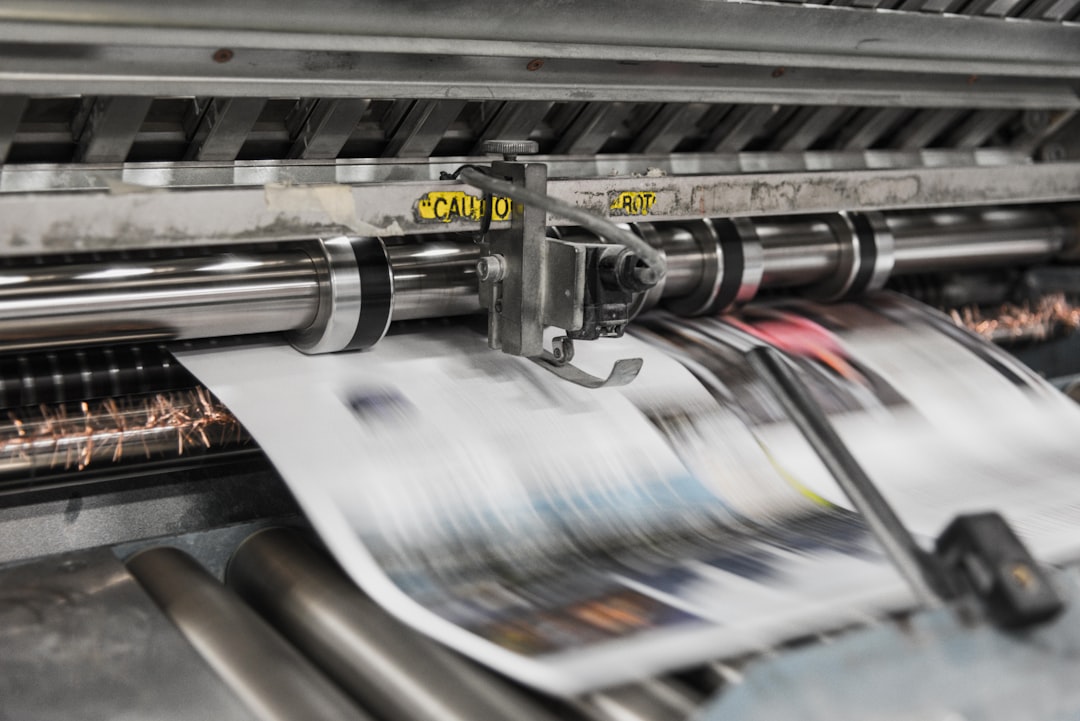
If you sell photo products, posters, reprints, or art prints, speed is not just a convenience metric—it is a trust signal. The faster your workflow moves from upload to approval to print to ship, the more professional your brand feels, especially for clients who expect responsive service and reliable delivery. In the world of photo product fulfillment, the biggest delays are often not in the printer’s machine; they happen in naming, handoffs, approvals, and storage organization. This guide shows how to build a cloud workflow that shortens turnaround time without sacrificing quality, privacy, or control.
We will focus on the parts of the process that teams often overlook: consistent file naming, proof approval gates, automated fulfillment triggers, and syncing print-ready folders in your cloud photo storage. You will also see how the best photo organization tools reduce rework, how automatic photo upload keeps jobs moving, and why secure sharing matters when your production chain depends on client feedback and final sign-off.
1. Why fulfillment speed depends on workflow design, not just printer capacity
Many teams assume fast print fulfillment is mainly a production issue: faster machines, more paper, better packing stations. In reality, the longest delays usually happen before the order reaches production. A client may take two days to approve proofs, a designer may upload the wrong version, or a team may waste an hour searching for the final crop file in a cluttered folder. That is why improving your workflow often creates a bigger speed gain than upgrading hardware.
Where time actually gets lost
Every order passes through the same core stages: file intake, verification, proofing, production, packing, and shipping. If any one of those stages has ambiguity, the whole order slows down. For example, a job named “final_final2.jpg” forces someone to interpret which version is print-ready, and that single ambiguity can create a support ticket, a re-export, or a missed deadline. Clean workflows remove the need for guesswork.
The hidden cost of rework
Rework is the silent killer of fulfillment speed. A missing bleed, a low-resolution upload, or a forgotten license note may not seem urgent until the order is already queued for print. A strong workflow catches those issues before production starts, which protects margins as well as turnaround. If you want a deeper view of how operational structure changes outcomes, see Operate vs Orchestrate and apply the same principle to your print pipeline: don’t just operate tasks, orchestrate the system.
Speed is also a trust feature
Creators and publishers build loyalty when customers can predict outcomes. A reliable two-day approval process is more valuable than an uncertain one-day rush, because it creates confidence. In other words, consistency often feels faster than raw speed. That is especially true when you support private photo sharing links for clients or family members who need simple, controlled access to proofs and final files.
2. Build naming conventions that eliminate confusion at the source
If you only change one thing in your workflow, change your file naming system. Naming conventions determine whether your team can sort, search, validate, and automate orders at scale. A good naming system should make a file readable to a human and machine-friendly for triggers, sorting rules, and print queues. It should also survive handoffs between editors, clients, and fulfillment staff without losing context.
Use one canonical structure
The best naming convention is boring on purpose. A strong format might look like: Client_Project_Product_Size_Date_Version. For example: Garcia_Wedding_12x18_Poster_2026-04-12_v03. That structure instantly tells production what the file is, what size it prints at, and whether it is the latest version. It also reduces the chance that someone accidentally prints a draft.
Separate print-ready files from working files
One of the fastest ways to prevent mistakes is to create clearly labeled folders for working assets, proofs, and final print-ready exports. Many teams use cloud folders like /In Progress, /Proofs, and /Print Ready, with each folder governed by a different permission level. That keeps your design team flexible while shielding the fulfillment queue from half-finished assets. For teams managing larger libraries, compare this approach with the search and tagging ideas in Real-Time AI News for Engineers, where watchlists work only when labels are reliable.
Include version control and status cues
Version control matters because print jobs often evolve after client review. Add status tags to the file name or folder metadata, such as v01-draft, v02-proof, and v03-approved. A small rule like “only v03-approved can enter production” prevents a huge amount of waste. If your workflow relies on images being re-used across products, your naming strategy should also account for cropping variants, color profiles, and licensing notes. That discipline is similar to the verification mindset described in Traceable on the Plate: the right label makes confidence possible.
3. Design a proof approval system that removes back-and-forth
Approval delays are one of the biggest causes of missed ship dates. The goal is not to rush clients; it is to make approvals frictionless, clear, and easy to complete on mobile. When a proof request is vague, clients respond with comments like “looks good, but can you make it pop more?” That kind of feedback creates more editing cycles and stalls the production line.
Make the proof review obvious
Every proof should include exactly what the client needs to decide: dimensions, paper type, finish, border treatment, crop area, and quantity. Instead of sending a scattered message thread, place the proof beside a concise checklist and a clear approve/reject button. This reduces interpretation errors and speeds up decisions. If you are building creator-facing experiences, study the clarity principles in Soft Launches vs Big Week Drops, because a clean announcement flow is also a clean approval flow.
Define approval rules before the order starts
The fastest teams decide in advance what counts as approval. For example: “Proofs submitted before 3 p.m. get same-day feedback; approved files enter print queue within one hour.” That kind of rule removes uncertainty and helps clients understand the speed of the system. It also protects your internal SLA because staff know exactly when to move a file forward.
Use fewer comments, but better comments
One reason proofs slow down is that reviewers leave scattered notes in multiple channels. Instead, use a single annotated proof with numbered comments that match the file. Better yet, guide clients with prompts like “approve crop,” “approve color,” or “request revision.” The more specific the question, the faster the answer. If your review process involves creator partnerships, the communication style from On-Camera Chemistry is surprisingly useful: structured interaction creates more authentic results.
4. Automate fulfillment triggers so approved orders move instantly
Once a proof is approved, the next delay should be near zero. That is where automation matters most. Fulfillment triggers can move an order from approved status to print queue, invoice update, packing queue, and shipping label generation with almost no manual touch. Done well, automation reduces labor and eliminates the lag between “yes” and “in production.”
Trigger on approval, not on manual review
The most efficient systems connect the approval status directly to the fulfillment workflow. When the client taps approve, the order status changes, a print-ready file is locked, and the production queue opens automatically. If someone must manually re-check the order after approval, your speed advantage disappears. This is where a real-time control system mindset helps: build trigger rules that reduce human bottlenecks without reducing safety.
Use guardrails for exceptions
Automation should not mean blind automation. Create exception rules for low-resolution files, missing rights metadata, oversized panoramas, or custom finishes. Instead of stopping every order, flag only the ones that need review. That keeps simple jobs moving while protecting quality on complex jobs. In the same way that contract and IP checklists reduce legal risk, production guardrails reduce fulfillment risk.
Track lead time by status
Measure how long jobs spend in each stage: uploaded, proofed, approved, printed, packed, shipped. You may find that the printing step takes 12 minutes while the approval step takes 18 hours. That insight changes everything. Once you can see where time is lost, you can target the real bottleneck instead of guessing. It is the same principle behind market analytics: better timing starts with better visibility.
5. Sync print-ready folders in the cloud so production never waits on uploads
Cloud syncing is one of the most underused ways to accelerate print fulfillment. If final, print-ready folders are always synced, production staff do not need to chase down attachments or ask designers to resend files. This becomes especially powerful for teams working remotely or across time zones. The goal is to make the print queue feel like a living system, not a file dump.
Create a dedicated print-ready destination
Instead of leaving final exports scattered across desktop folders or chat apps, create a single canonical cloud folder for print-ready assets. This folder should contain only files that meet production standards: correct resolution, color profile, crop, bleed, and naming convention. A dedicated folder reduces accidental errors and makes it easy to automate downstream actions. If you want a relevant operational analogy, look at budget gear for apartment-friendly workflows, where compact setups win because every component has a purpose.
Keep folder permissions tight
Not everyone needs access to every stage of the workflow. Designers may need edit rights in working folders, but fulfillment teams only need access to approved exports. Clients may only need a view-only proof link. Tight permissions prevent accidental overwrites and make audit trails cleaner. This is particularly important when managing privacy-sensitive libraries where access control is part of the customer promise.
Use sync checks before the queue opens
Even the best cloud system can lag if a file is not fully synced. Establish a rule that no order enters print until the file has a confirmed sync status and a checksum or upload completion marker. This small step prevents the classic “missing last upload” problem that causes late-night emergencies. If your team works across regions, treat sync validation the way travel planners treat schedules in volatile fare markets: timing discipline saves both money and frustration.
6. Use organization systems that make large libraries searchable in seconds
Fast fulfillment is impossible when staff cannot find the right file quickly. Large libraries need more than folders; they need searchable metadata, tags, and clear taxonomy. The best systems support both structured browsing and fast search, so a user can find the needed print asset by client name, event, date, product type, or license status. Without that layer, every order starts with a scavenger hunt.
Tag for fulfillment, not just for aesthetics
Most photo libraries are organized around creative categories, but production teams need operational tags too. Consider tags such as approved, print-ready, reprint, licensed, client-proofed, and ship-today. These tags turn your library into a working fulfillment engine. The difference is similar to how search-safe listicles succeed: structure matters because systems need signals.
Standardize date and event formats
Date formatting is a classic source of confusion, especially in global teams. Pick one format and never vary it: YYYY-MM-DD is usually best because it sorts naturally. For event-based catalogs, pair date with event name and location so files are easy to query later. That matters for repeat clients, seasonal products, and archived designs that may need reprints months later. If you manage recurring schedules across campaigns, the logic is similar to the planning in time-zone watchlists: precision beats memory.
Build a “ready to print” search path
Your team should be able to search one phrase—like “approved 16x20 poster” or “licensed square print”—and get only usable files. Achieve that by combining naming rules, tags, and folder structure. In practice, this dramatically lowers the time required to relaunch old projects or fulfill repeat orders. It also improves the experience of customers who want memorable comeback products or revived fan prints from earlier campaigns.
7. Protect privacy, licensing, and client trust while speeding things up
Some teams hesitate to automate because they worry speed will weaken privacy or compliance. In reality, the right system strengthens both. If your workflow includes client galleries, licensed images, family photos, or brand-sensitive materials, access control must be designed in from the start. A secure workflow protects you from accidental exposure and makes clients more willing to approve and purchase quickly.
Use private sharing for proofing and approval
Private sharing links are the cleanest way to let reviewers see exactly what they need without opening the whole library. Set expirations, restrict downloads where necessary, and keep comments inside the proofing environment rather than in scattered message threads. This makes feedback easier to manage and keeps files from being forwarded without permission. Speed and control can coexist when access is intentional.
Track rights and usage metadata
If you sell art prints or reprints, rights status should be visible before fulfillment begins. A beautiful image is not enough; you need to know whether it can be printed, whether the license allows resale, and whether a credit line is required. Build license fields into your upload and approval process so staff do not have to investigate later. For teams that publish creator work, the governance principles in artist and fan community rights are a strong reminder that ownership and access are business-critical.
Make trust visible in the customer journey
When customers can see exactly where their order is—uploaded, proofed, approved, printed, shipped—they feel safer buying again. That visibility matters even more when the purchase is personalized or sentimental. It also reduces support tickets because people do not have to ask “Did you get my file?” every time they want an update. In markets where trust drives conversion, this is as important as product quality itself, much like the perception mechanics discussed in brand positioning and perceived value.
8. Compare workflow models: manual, semi-automated, and fully synced
Not every business needs the same level of automation on day one. But understanding the trade-offs helps you decide where to invest. The table below compares three common fulfillment models across speed, cost, risk, and scalability. Use it as a practical planning tool for your own operation.
| Workflow Model | Typical Turnaround | Strengths | Weaknesses | Best For |
|---|---|---|---|---|
| Manual | 2–5 days before print | Flexible, low setup cost | Slow handoffs, high rework, inconsistent approvals | Small volume, custom-only jobs |
| Semi-Automated | 12–36 hours before print | Good balance of control and speed | Still depends on staff to move files between stages | Growing studios and creator brands |
| Fully Synced | Minutes to a few hours | Fastest approvals, fewer mistakes, scalable | Requires structured metadata and process discipline | High-volume photo printing and reprints |
| Folder-Chaos Model | Unpredictable | None worth relying on | Lost files, version confusion, poor customer experience | Should be eliminated |
| Rule-Based Cloud Workflow | Same day or next day | Automated triggers, secure approvals, easy tracking | Needs initial setup and ongoing maintenance | Most modern creator businesses |
The practical takeaway is simple: speed scales best when the workflow itself is designed to move files forward automatically. If your team is still relying on memory, direct messages, and desktop uploads, your bottleneck is structural. A rule-based cloud system is much easier to improve than a chaos-based one.
9. A step-by-step blueprint to reduce turnaround time today
You do not need a full platform migration to start improving turnaround. Most teams can cut fulfillment time by reorganizing the most fragile parts of the workflow first. The key is to remove ambiguity in sequence: name, proof, approve, sync, and print. Each step should make the next one easier, not harder.
Step 1: Lock the naming standard
Choose one file naming convention and enforce it across all uploads. Add a checklist for staff and collaborators so every file has the same core elements. This alone can reduce time spent searching and relabeling assets. To make adoption easier, write the standard into your onboarding docs and client instructions.
Step 2: Create a proofing gate with clear approval rules
Use a single review location for each order and require one explicit approval action before production. Make the proof review process visual, mobile-friendly, and time-bound. If you deal with recurring clients, consider storing review preferences so their future orders move even faster. This is similar to how thoughtful audience targeting improves engagement in customer engagement case studies: consistency is the real accelerator.
Step 3: Automate the trigger into print queue
Once a proof is approved, the system should update order status and route the file into the print-ready folder automatically. Add exception checks for resolution, size, and license status, but avoid requiring human confirmation for every normal order. The fewer steps between approval and print, the lower the chance of delay. If you want to think like a high-performing publishing operation, compare it to publishers versus developers debating trailer use: the workflow needs both speed and governance.
Step 4: Audit your sync and notification settings
Make sure the team receives immediate alerts when a file is approved, synced, or blocked by an exception. Alerts should be actionable, not noisy. The moment the file becomes print-ready, the print team should know what to do next without digging through inboxes or chat logs. That reduces lag and creates a clean operating rhythm.
10. What high-performing print workflows have in common
The best fulfillment systems are not necessarily the most complicated. They are the most legible. Everyone involved knows where the file is, what state it is in, who owns the next action, and what “done” means. That clarity is what makes speed sustainable instead of chaotic.
They minimize choice at the wrong stage
The fewer decisions a job needs after approval, the faster it moves. Good systems force decisions early, when designers and clients can still make them carefully. By the time the file reaches production, the only remaining choices should be operational ones. That is the core of reliable workflow readiness: define quality before execution starts.
They keep proofing and fulfillment tightly connected
Approval should not live in one tool while printing lives in another with no bridge between them. The stronger the connection, the lower the delay. This is why integrated cloud services matter so much for creators and families alike: the photo backup, approval, and print paths should feel like one continuous system. That unified model also makes it easier to scale into future products without changing your operating discipline.
They treat organization as part of customer service
When a customer asks for a reprint six months later, you should be able to find the exact image, size, and version fast. Good organization is not an internal nicety; it is a customer-facing advantage. It helps with repeat orders, batch jobs, and seasonal promotions. In that sense, your archive is a revenue asset, not a storage bill.
Pro Tip: If your order can’t be identified in one glance by a new team member, it is not organized enough for fast fulfillment. The best systems are understandable even when the original designer is offline.
11. FAQ: fast print fulfillment in the cloud
How do naming conventions actually speed up fulfillment?
They reduce ambiguity. When every file name includes the client, product type, size, date, and version, staff can find, verify, and route files without opening each one. That cuts search time and prevents wrong-version printing. It also makes automation rules easier to build.
Should clients approve proofs in email or in a shared link?
Shared proof links are usually better because they keep feedback in one place, support version control, and can be secured with permissions. Email threads often fragment comments and make it harder to know which version was approved. A controlled link is also better for privacy and auditability.
What is the fastest way to reduce print turnaround without new software?
Start by standardizing file names, creating a single print-ready folder, and defining one approval action that triggers production. Those changes often produce immediate gains even before deeper automation is added. The reason is simple: they remove decision friction and manual searching.
How do I protect privacy while still moving quickly?
Use view-only or expiring private links for proofs, limit editing rights to working folders, and keep final print assets in a restricted cloud folder. Also make sure license and usage metadata are visible before files enter the print queue. Privacy improves when access is purposeful rather than broad.
What metrics should I track to know if my workflow is improving?
Track time from upload to proof, proof to approval, approval to print, print to ship, and total order turnaround. Also measure rework rate, support tickets per order, and percentage of orders that enter production without manual intervention. Those numbers reveal whether your process is getting faster or just busier.
How do photo backup and fulfillment work together?
A strong photo backup service ensures originals and exports are safe, while fulfillment workflows use the backed-up assets to produce print-ready outputs quickly. When backup, organization, and proofing share the same cloud system, you reduce file loss and re-upload delays. That combination is especially valuable for repeat print orders and archival reprints.
Conclusion: speed comes from clarity, not pressure
Fast print fulfillment is not about pushing your team harder. It is about making every step of the cloud workflow more legible, automated, and secure. When naming conventions are standardized, proof approvals are simple, fulfillment triggers are integrated, and print-ready folders sync reliably, your business becomes faster without becoming fragile. That is the real competitive edge in online photo printing and modern photo commerce.
For creators, publishers, and families, the ideal system combines automatic photo upload, smart organization, private review links, and dependable fulfillment into one smooth experience. If you are building this into a brand or service, start with the workflow basics, then layer on automation as your volume grows. The businesses that win are usually the ones that make the next step obvious.
And if you want to think long term, remember this: the best workflows are not just faster; they are easier to trust. That trust is what leads customers to order again, share more, and choose your products over a general retailer offering lower-quality options. In a market where people expect high quality photo prints with professional handling, workflow design is part of the product itself.
Related Reading
- How Creators Can Build Search-Safe Listicles That Still Rank - Useful for structuring content and metadata so your library stays easy to search.
- Integrating Third-Party Foundation Models While Preserving User Privacy - A helpful privacy lens for permissioned photo workflows.
- Operate vs Orchestrate - A framework for moving from manual tasks to system-level automation.
- Soft Launches vs Big Week Drops - Great inspiration for better proofing and approval communication.
- Real-Time AI News for Engineers - Shows how disciplined tagging and watchlists improve fast decision-making.